I am not a native of these lands.
But I claim them nonetheless.
I claim them with my muddy boots.
The plight of the part-time nomad…
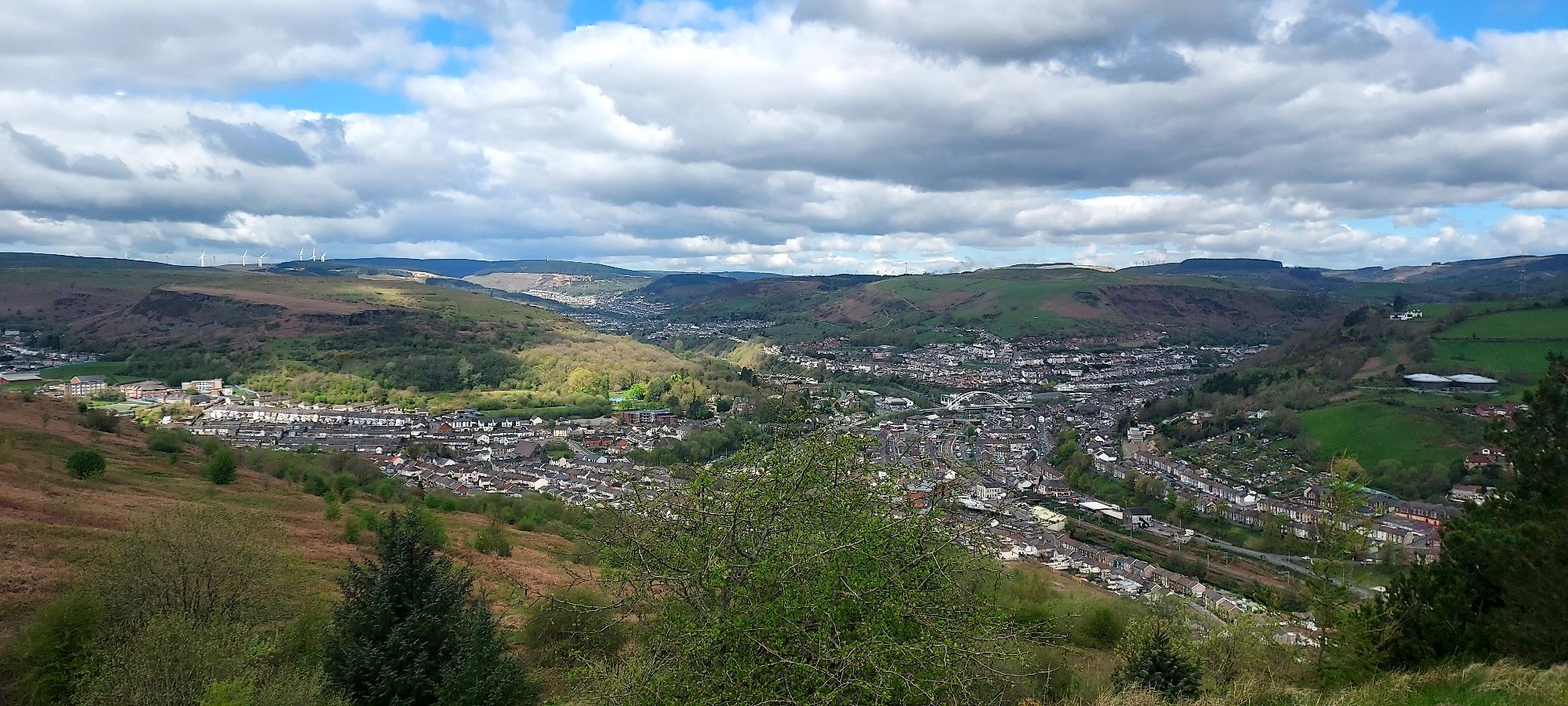
The South Wales valleys have been my home for 13 years, and I have lived in Wales for over half of my life.
Previous to this, life’s twists and turns twisted and turned me to different locations.
Not, I should add, with the romanticism of a seasoned traveller, more with the startled pragmatism of a squirrel who finds itself in a unintended tree and decides to make the best of the new nut supply.
I am an accidental nomad.
When you join the accidental nomad club, something strange can happen to your sense of place in the world.
If you leave your home town in early adulthood, and return after some years, you will still have wild and scattered roots there, but those around you, who never left, have somehow grown and rooted differently, and more deeply.
You feel that you are no longer quite one of them.
At the same time, you will never set down roots in a new town quite like those of the natives.
You haven’t grown there, experienced what they have.
Because of this, those of us with nomadic periods or moves in life may struggle to feel fully rooted, fully at home, anywhere...
The allure of the valleys…
I am from the green lands of Gloucestershire, a place of immense beauty, but after university (in Aberystwyth) I lived and worked for six months in Canada, and travelled around the States.
After a few years back in my home town, I moved to the thriving (but disconcertingly flat for a Gloucester lass – it has to be said) city of Cardiff, where I lived for ten years before making the move to Pontypridd.
It didn’t take long for the valleys to start beguiling me.
Although I am English, my grandparents were Welsh, from Cefn Coed, not so very far from here, and even when I worked in Cardiff, the sound of the softly musical valleys accent, when I came across it, was a balm to my ears.
It evoked strongly comforting memories of my family from my youth, and of my visits to Wales, and put me instantly in a faintly remembered sunlit room with friendly laughter and cucumber sandwiches.
After mixed experiences, and city living in Cardiff, the pure undiluted friendliness of the valleys was a joyful surprise. Never once, despite my Englishness, have I been made to feel anything other than welcome here.
I have found a place where chatting to anyone and everyone you see is the norm, (as it should be) and where warmth, humour, and helpfulness, even to complete strangers, is the default setting.
I quickly loved the people, the feel of the place, the landscape, but those feelings came with the built in objectivity of a place viewed with fresh adult eyes – not the bone-deep instinct of a land grown into.
Walking and landscape as medicine…
A few years ago, and it’s important to say this, as we need to be more open – I began to struggle with my mental health, in particular with anxiety and exhaustion, symptoms of my newly discovered ADHD.
The journey of the last few years has been turbulent, but over time, my life started to change, by necessity, around my health and wellness needs.
I have always been deeply drawn to nature and the outdoors, but suddenly they were more than a pleasant distraction – they were a lifeline.
Nature and walking. My most powerful allies in the fight for equilibrium.
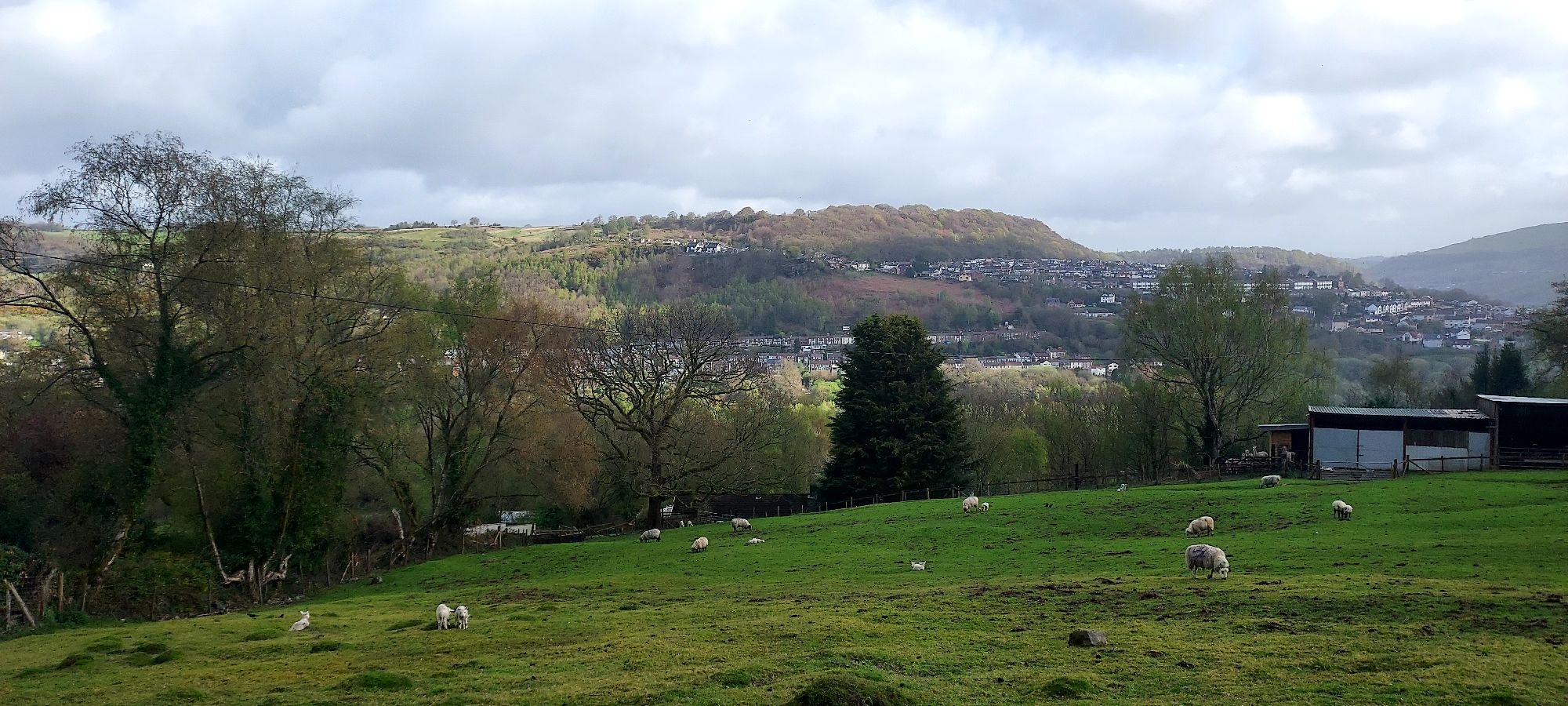
I began to walk – randomly, determinedly, sometimes rambling, sometimes striding, sometimes with places in mind, at other times directionless – just forcing myself to take the powerful medicine of stepping out of the front door.
It calmed by mind, stilled my senses – reconnected me to some sense of self in a chaotic world.
I started to combine my walking with diarising the sights, sounds and experiences that accompanied these walks – with photographing and immersing in nature – and writing about nature and wellness.
(See also – Two bats and squirrel – The birth of a walking diary)
As I did this, I could feel a gentle transformation happening not just in myself, and my priorities in life, but in my relationship to the land and the people around me.
The nature on my doorstep, the walks through, around, and beyond our town, became a vital focus and tonic for a struggling brain.
But they did more than that – they infiltrated my senses – my feeling of my own place in the world – my sense of belonging.
Forging empowerment through the landscape…
I have a brain in which “sense of direction” mode has been disabled.
In fact, I would go so far as to say I have some kind of an anti-directional field.
This powerful and magnetic physical feature, whereby my brain simply doesn’t compute direction in the same way that others do, has caused me many problems in life from lost cars in supermarket car parks to journeys which have taken me two hours the wrong way.
It is something I have had to try very hard to make my peace with.
When I walk the wild landscapes around me though, something different happens – something that makes me feel less helpless in a directionless world.
Walking in nature, I feel the contours and curvature of the land beneath me – the landscape and rambling pathways suddenly begin to make sense in a different way.
It it is like my feet can follow paths my brain can’t register.
To a perpetually lost brain, this is moving empowerment.
And it gives me agency – over myself, my walking, my landscape – a warrior-like sense of freedom in a normally inaccessible world.
(See also – Walking. The gentle therapy with warrior power)
The uniqueness of the Welsh valleys landscape…
There is a reason that renowned painters like Kyffin Willians, Will Roberts and Ceri Richards were drawn to the Welsh landscape. The range across Wales of coastal, mountain and wild farming landscapes are a painters dream.
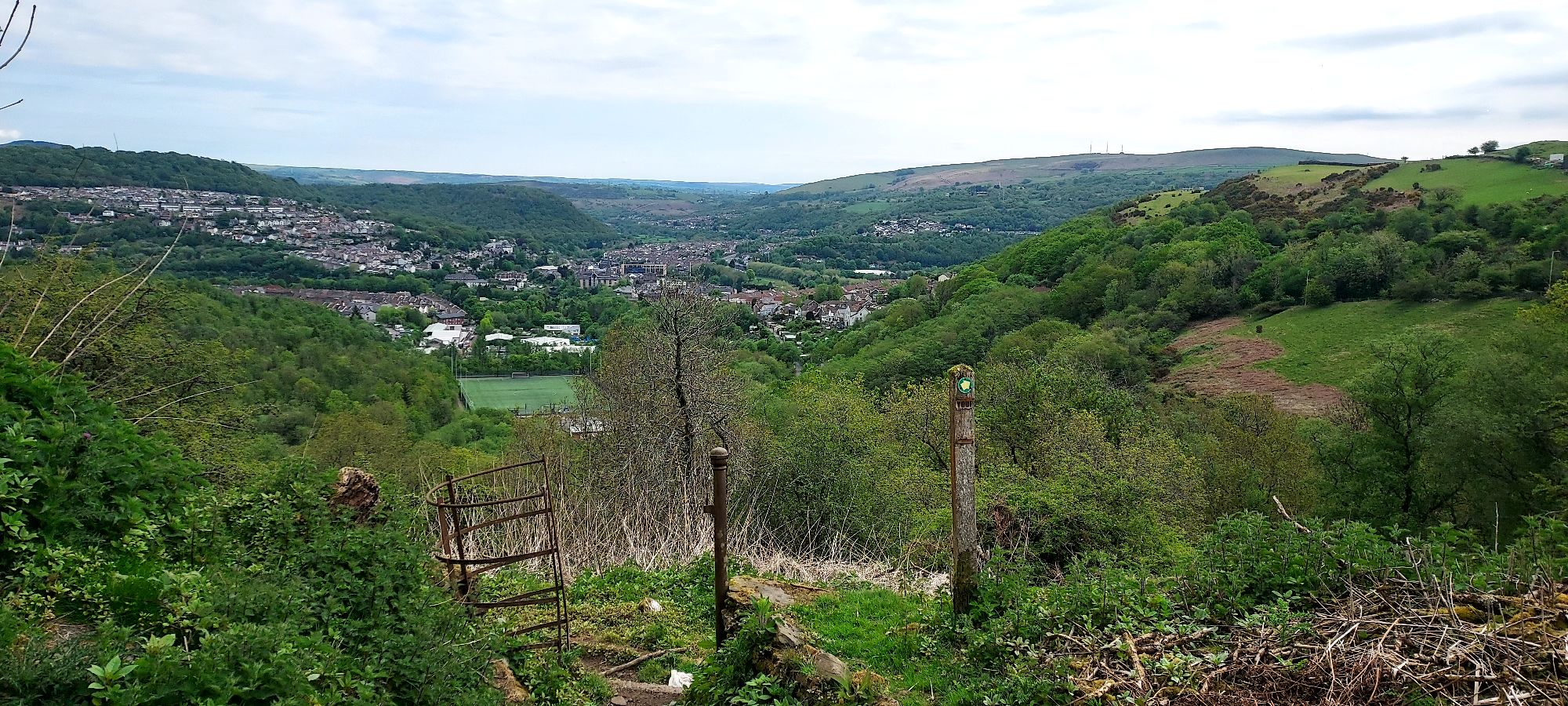
Within the traditions of landscape art in Wales, painters like Jack Jones, Ernest Zobole and Valerie Ganz, amongst many others, were particularly drawn to capture scenes of the Welsh Valleys – of the humble terraces against steep mountain backdrops, of dusty mining and industrial scenes -and of working people going about their day to day lives.
There is something very special about the landscape of my adopted home.
I remember from childhood visits 40 years ago, the much blacker and more forbidding vistas of the valleys, scarred from mining.
I also remember the utter brilliance of the view over Cefn Coed viaduct, with shafts of sunlight illuminating, and rendering magical, the steep valley sides.
Even with its scars, the landscape underneath showed me its capacity for wonder and beauty.
The vistas of the valleys are sometimes stark, unforgiving – sweeping views that are one minute bleak and desolate under dark clouds or gathering storms – but the next transformed by sunlight.
They are all the more brilliant in the sharp contrasts of light and shade formed in the steep valley sides.
The quality of light here is just different, beauty more spectacular – more hard won.
Connecting to the land…
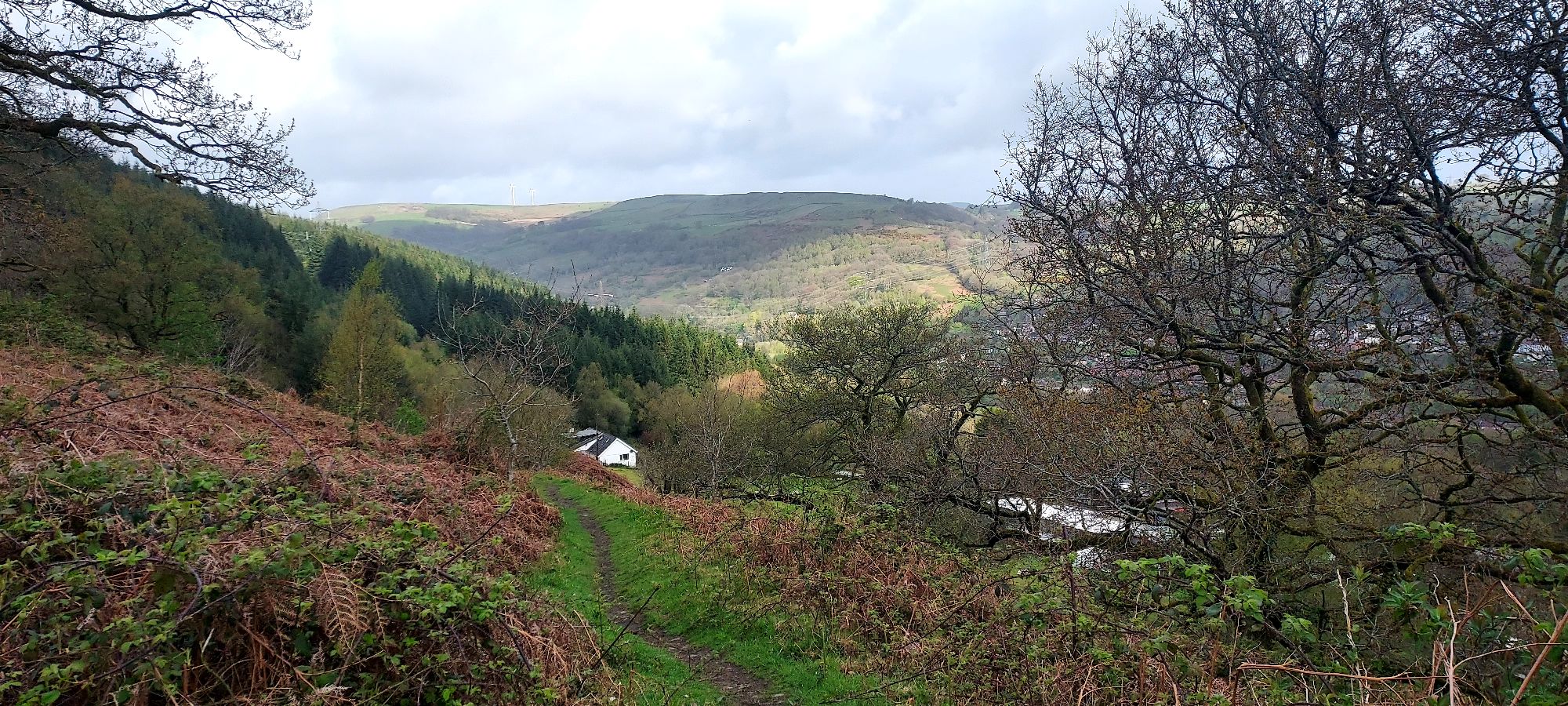
Every year now, the surroundings of the South Wales valleys become greener – nature reclaiming its territory from the dust and spoil.
Learning about the past of my new home town, from its mining heritage, old sites and workings, changing architecture, growing landscapes and well-kept secrets, has become a natural extension of my walking.
Old maps have become a thing of both beauty and fascination, and every new pathway, story, or discovery, pulls me further into their overlaying lines.
To walk the landscape is to understand by default, by sense – the area you live in – it brings an infinitely heightened awareness of its changes, season by season, year by year, which cannot help but make you feel part of it.
We need to protect our evolving landscapes for future generations, as well as protecting our freedoms to walk and explore our lands – to roam freely.
We need autonomy over, and an understanding of the ground beneath our feet – enabling its secrets and histories to become part of our lives.
Nothing brings history to life, brings an understanding of place, like roaming, investigating, walking.
When we walk, we learn our landscapes, their mysteries, their surprises, but we also simply feel them – their ever-changing wonder – and it flows through our veins as we move.
This isn’t just a tonic for individual health and wellness, but for connection, both with landscape and community.
Walking, and our local places, connect us to people…
I have found, over the past years of roaming these mountains, that my enjoyment, my understanding, and my feeling of connection on my walks is deepened infinitely by communication.
I might be a typically solo walker, but I will stop and talk to whoever I can out in the wilds.
I’m the over enthusiastic middle-aged woman who is demanding to know what footpath you’ve just come from – sorry about that.
You share a mutual experience of a place with another person, sometimes only for a few moments, but looking and feeling exactly as it does on that day – in that low ray of sunshine – admiring the first primrose of spring.
You are connected by one unique moment in a place and landscape shared.
Sometimes, not infrequently, the conversations are more in depth, the encounters more profound. A few minutes of peoples lives and histories shared with you due to a remote passing on a mountain path.
But through these conversations – these stories – these moments shared with fellow walkers, travellers, and locals alike – the ground and the histories beneath my feet are illuminated with a new and powerful force.
I have heard tales of regular horse journeys over the now heavily wooded mountain I live on, of the fan shafts and tramways to the mines neighbouring some of the town’s oldest cottages, of Iron age treasures being discovered on the Graig mountain, of now bricked up tunnels used as childhood playgrounds, of routes once walked now hidden in nature’s grasp.
A local man told me of a vast spread of coal spoil, now a dedicated nature reserve hosting rare species, which sparkled like diamonds on moonlit nights when viewed from the mountain dwellings above.
I have also heard the everyday stories of people growing up here, their experiences, the movingly ordinary moments from past and present that make us individual, but also bring us together.
Hiraeth – and belonging…
In Wales we talk of Hiraeth, a word of complex meaning which is particularly relevant to the nomads among us.
It means a longing or yearning for a home, lost past or landscape, a sense of nostalgia, or something indefinable, missing from our lives.
I think in the modern world of both over- connection and disconnection, many of us suffer from these senses, without ever being able to fully articulate what our brains and bodies are yearning for.
We feel that we are searching, that there must be some clear and linear pathway, an organised sense of our place in the world, our sense of home.
I think we need to be more dynamic in our idea of what belonging should feel like.
A sense of home cannot be forced, and belonging cannot be bought – but connection can always be sought.
Connection, through landscapes and community, whatever your current location, is the most inviting, verdant, flower filled pathway toward belonging.
A balm for the lostness of modern life – a nurturing fuel for a nomad’s empty tank.
Home is where the heart sings, the mind opens, and the footsteps are trodden fearlessly.
And belonging is a breathing, moving sense…
Our own lives, our understanding of the past, the landscape around us- is not static – but evolves with time, with stories, and with connection.
So maybe it doesn’t matter if our homes have changed, if we have left our roots…if we are not one of the locals…
If we accept that our own experiences ebb and flow, change and evolve, just like the weather and the seasons, we can find a gentle rootedness, even in our shifting histories.
On a recent trip to Gloucester, I registered the rolling green hills and verdant vistas with a familiar tug.
My childhood landscape is a primal sunlit pathway, wending through my being.
Even without its constant presence, the fact that it is so deeply embedded, and always will be, brings me peace, not discontent.
And to the sweeping valleys that surround me, I may not owe my bones, but I do owe a piece of my heart, and a lot of my footprints, for the gifts they give me everyday.
I may have a divergent, and less tidy sense of my place in the world – but it doesn’t mean I cannot belong.
Walking the landscapes and communities around me invites them in.
When I seek my belonging, I tread lightly, with open heart and mind – laying roots more like a rambling wildflower than a mighty oak…
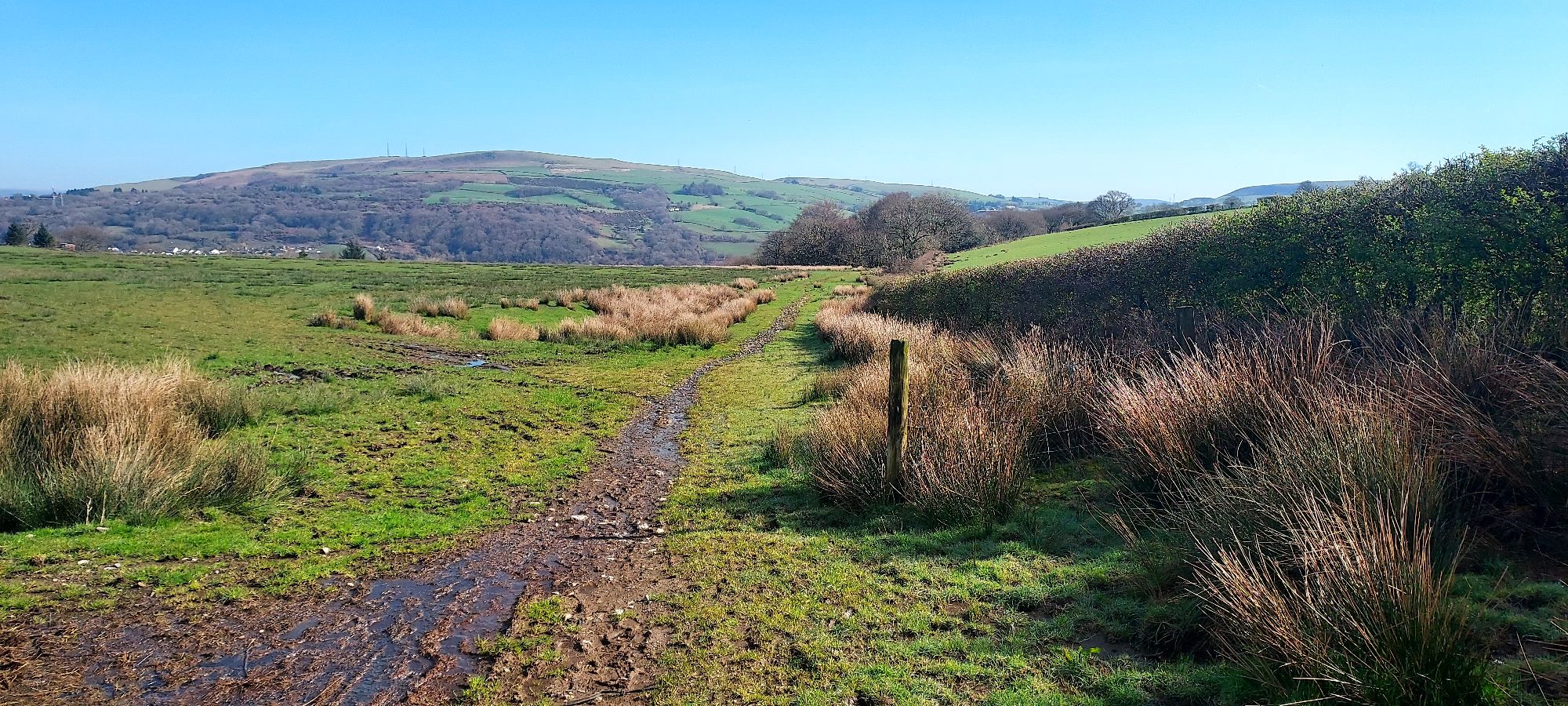
Even lightly adrift, through the mists of an evolving life, I set down silver threads over every mountain path.
Filigree tendrils of being. Of presence.
The tracks of my boots forge my connection – my desire to belong – across the open landscape…
 bewilderbrain
Thoughts or ramblings welcome here…