
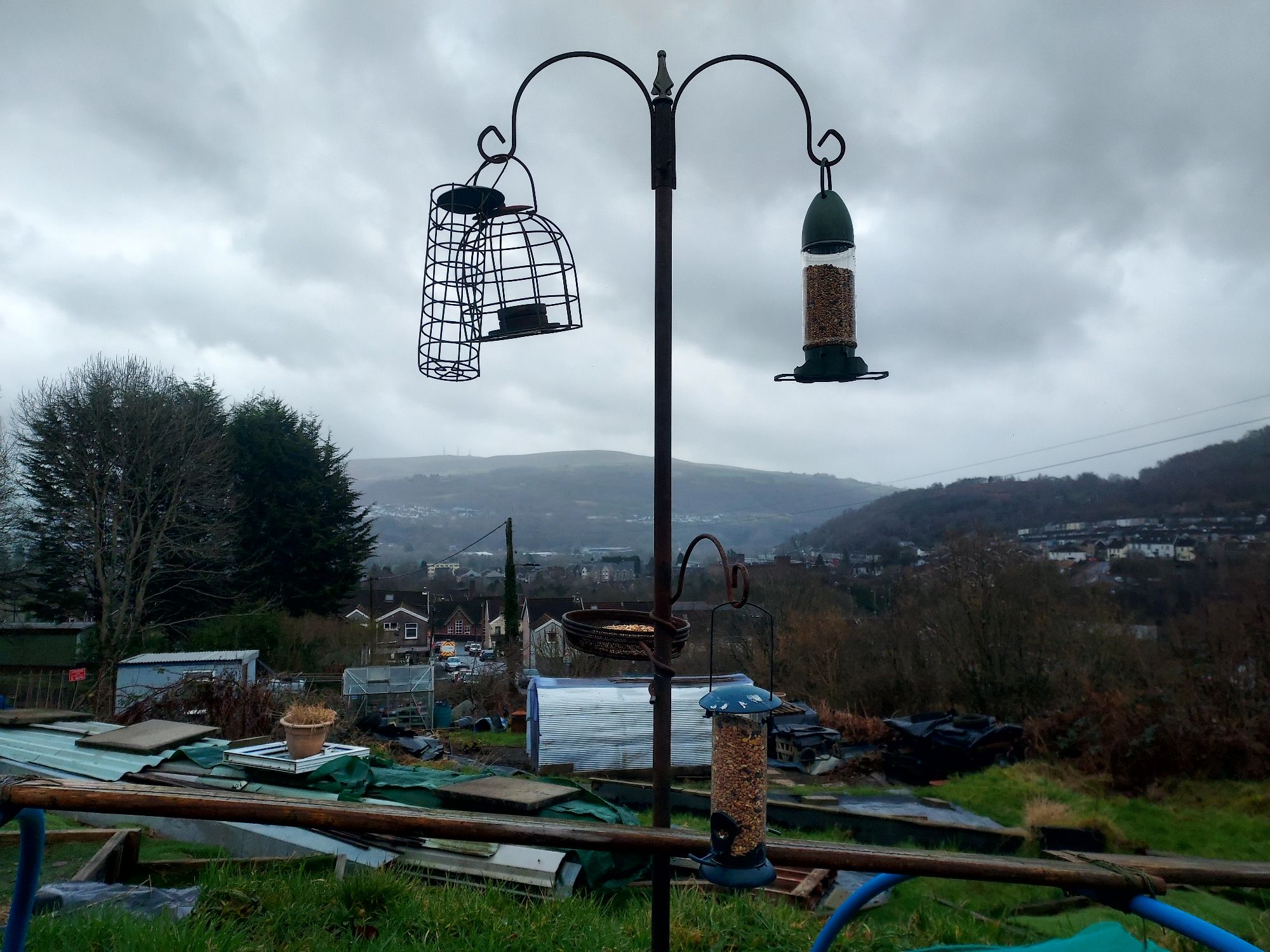
Take one rather tired and grumpy family, one cold and drizzly January day, and one set of binoculars then add a flask of tea, a hefty sprinkling of snacks, and mix thoroughly…
It’s due to rain all day. One child has had already had a reluctant appointment with Sunday morning sports, and is recovering from post-sleepover over-stimulation come-down, one child is feeling very much like staying at home due to the weekend pyjama thrall that is so distinct to January, and due to a combination of factors, we are having a tired, hectic and disorganised start to our Sunday.
As usual, there are a million and one jobs waiting in the house, but there is an hour window where the rain looks lighter, and it’s the last day of the RSPB Big Garden Birdwatch.
We always do the Big Garden Birdwatch.
For a family that can struggle a great deal with organisation, routine can be strangely soothing. For me, the best routines are simple ones, and those that chime with the seasons.
The RSPB Big Garden Birdwatch is one of our family seasonal events – nothing big or showy, just something we do – and something that is unique to this particular part of the winter – this particular turn of the wheel.
It comes off the back of this years Winterwatch series (first episode celebrated with family hot chocolate) another much loved seasonal grounding force for us, along with Springwatch, enjoyed in the late dusk of June, and it adds to our feeling of not just connection, but reciprocol influence in the preservation of nature.
Every active involvement is a cog in the wheel.
Write down some birds. Scatter some seeds…
In common with many households in the Welsh Valleys, our actual garden resembles the North Face of the Eiger, with small lower patio areas complimented by a modest lawn towering in the clouds some 12 feet above, and accessed via elderly steep stone steps that ought really to be a ski lift.
Whilst we love our little patch, and do our best to fill it with nature, we also have the immense privilege of an allotment to our name.
As well as being close by, it is a good size piece of land, offering spectacular views over the valleys, and its further reaching skies are our intended destination for our mission.
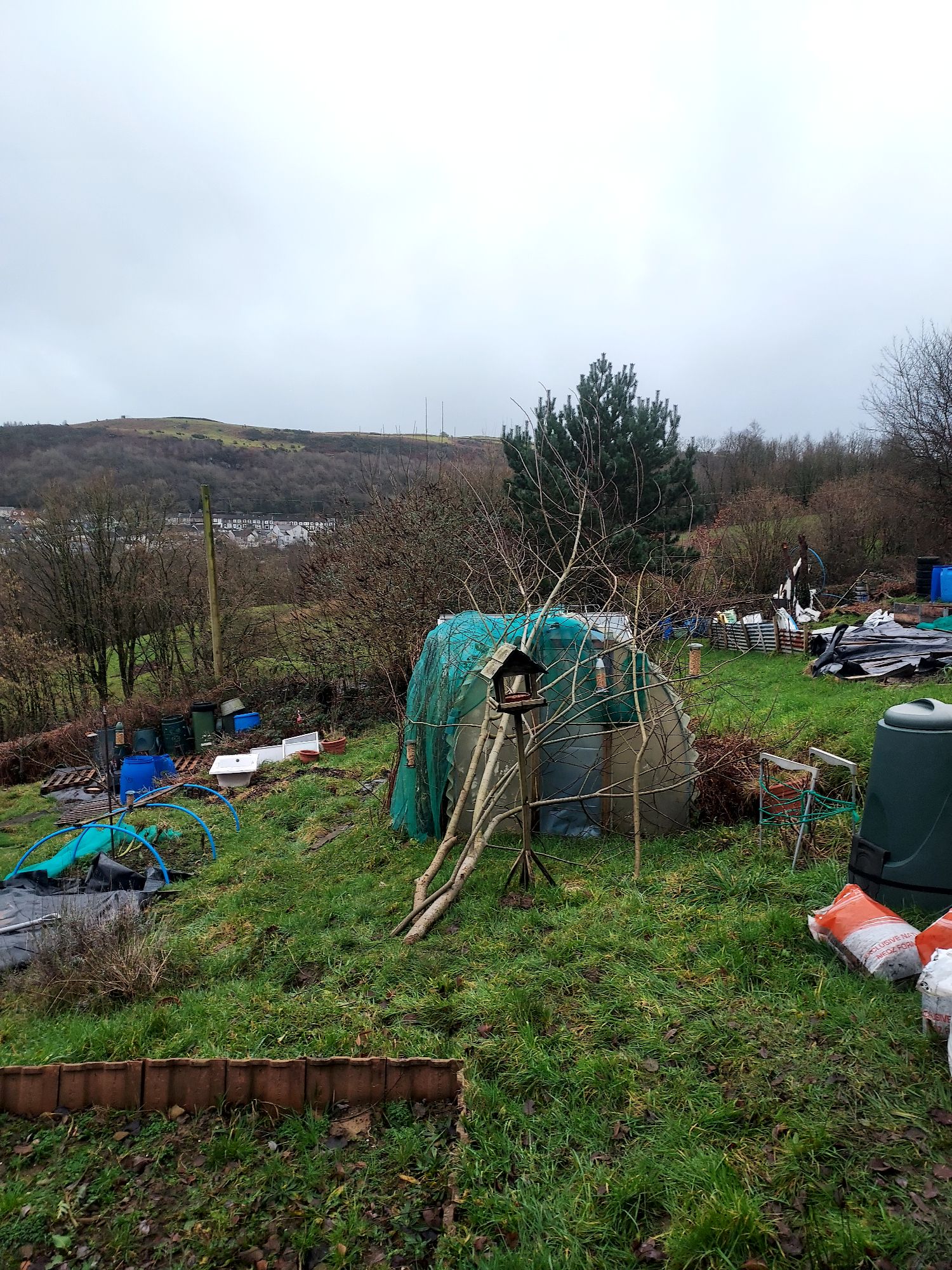
There is some upset, much cajoling, encouraging, and biscuit brandishment, but exit from the house is achieved with an air of determined resignation.
The walk begins in a sullen manner, but the rain holds off, and a few minutes of light and fresh air begins to make just the slightest indent into unyielding moods.
As we walk up the steep grassy path to our plot, the distinct call of a buzzard sweeping overhead gives our spirits a much firmer nudge.
As is unfortunately typical for us, we haven’t prepared by keeping the bird feeders regularly topped up over the previous weeks, as we were supposed to, and though a couple have been up for a few days, we optimistically bring a few more with us.
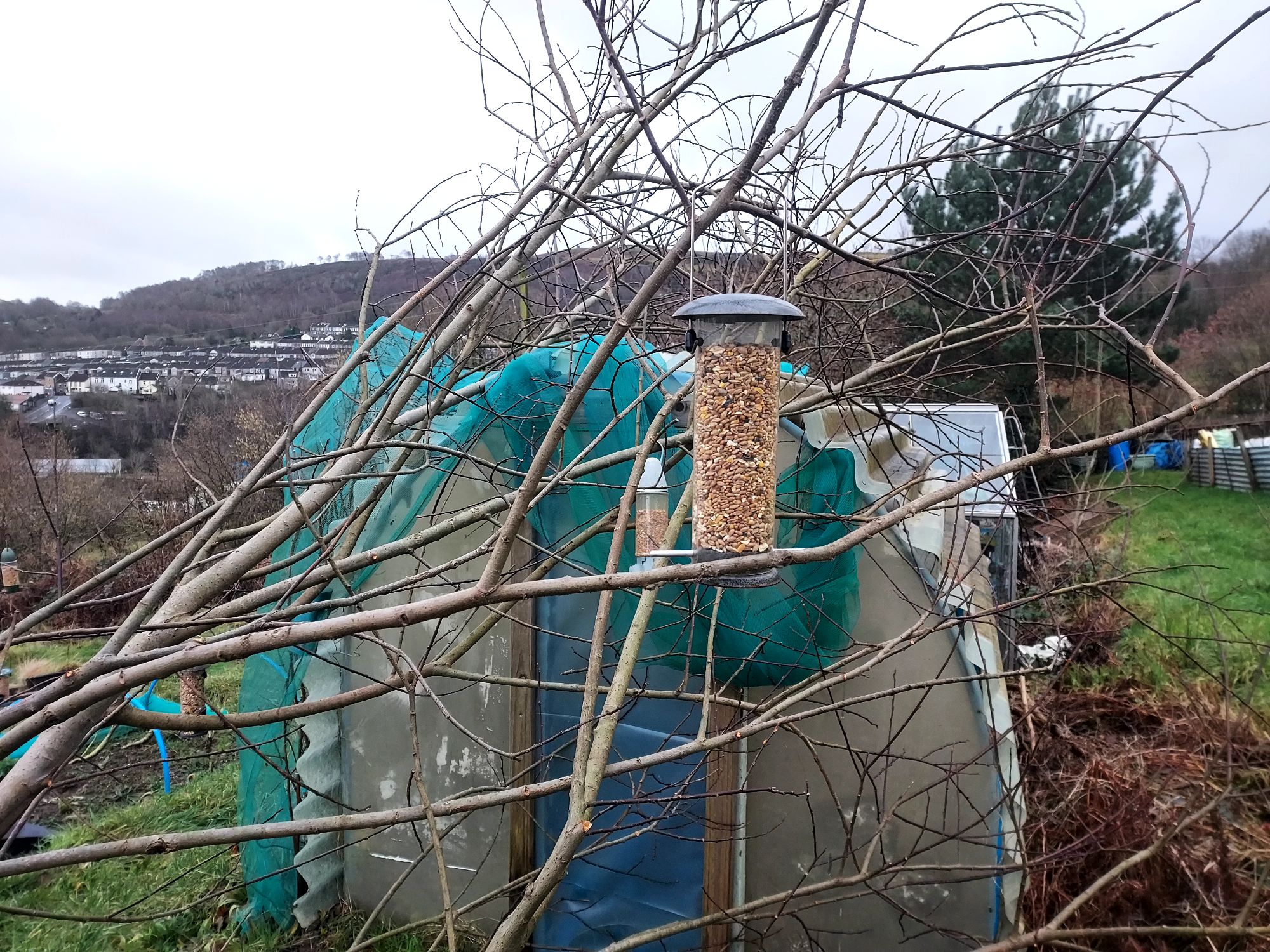
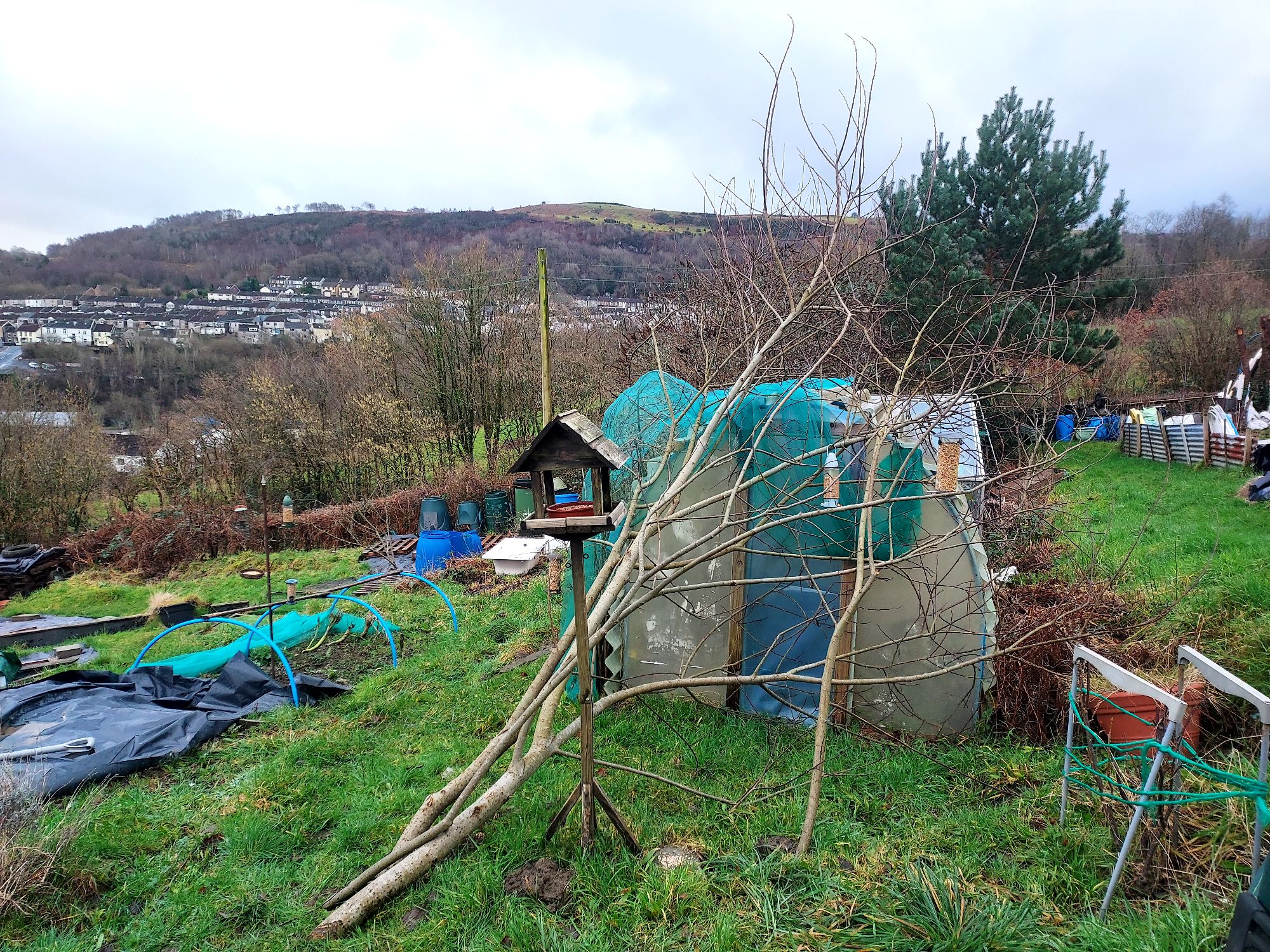
We set the extra feeders in the recently cut off branches of a tree which is slowly starting to push the shed over. Nature is firmly in charge up here.
Winterwatch shared some new information about feeding birds, and I was amazed to learn that over 60 per cent of UK households have bird feeders.
We are obviously very well intentioned with this, and a nation of bird lovers, and feeders in our gardens do offer us closer and more immediate connections to our avian friends.
There is now evidence however, that there could be some overall detriment to the natural wild feeding patterns of birds, in particular, indirect influences on those insectivorous species that don’t feed on seeds.
As Chris Packham stated, this is more food for future thought and research at this stage, but what is clear, feeders or not, is that one of the best things we can be doing for birds is planting considerately; berry producing plants, teasels, plants and flowers that support a diverse array of insect life – and leaving plenty of wild areas for birds and wildlife in general to flourish by natural means.
I decide that we will focus more heavily this year on planting that might provide natural food sources for birds. We already have large deliberately wild areas around our pond.
Our allotment is not at its tidiest in January, actually -it’s never tidy, and neither does it need to be.
But in its winter stillness are scattered some of the jobs for the months ahead, bags of manure to distribute, an old bathtub to be turned into a new pond, the broken pieces of of an old fence panel that formed part of our homemade “hide” next to the shed, that came down in the last storm, waiting to be replaced and rebuilt.
In the absence of its shelter, we spend a few minutes clearing space in the shed, which, with its doors open, yields good views down over the rest of the plot.
The elderly bench seat is cleared, space is made, and after some arguments about spiders hiding on the underside of the plastic chairs, everyone gets settled.
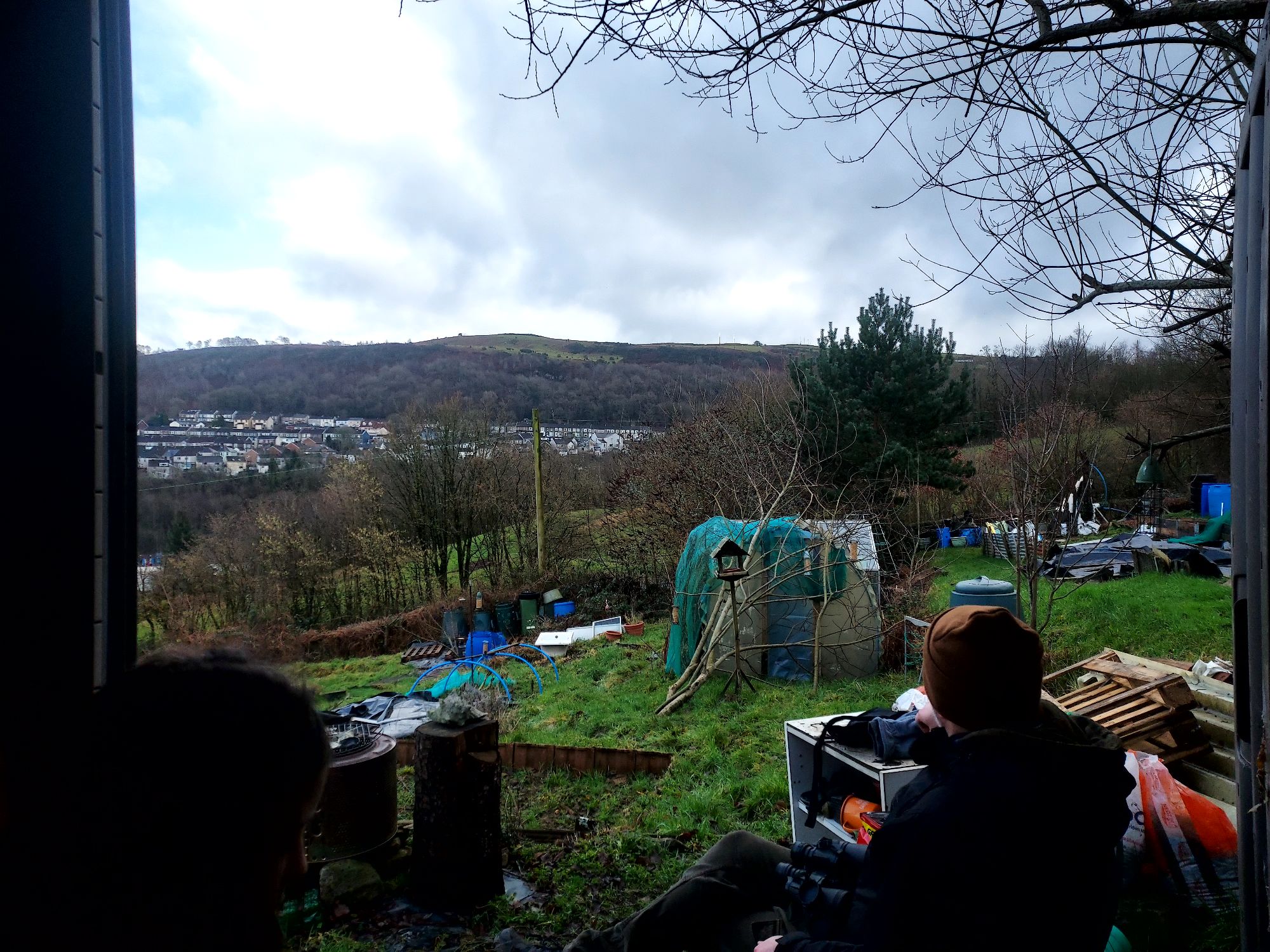
Children placated with the first in a series of snacks, we start the watch officially, and as our voices mute and the hush descends, the magic of the outdoors begins its tuning of our senses.
A bird is spotted, it is over a neighbouring hill, rather than on our patch, so can’t be counted, but it starts a whispered discussion about what it could be, which begins to focus our attention, bringing us into the moment.
The skies are resolutely grey though, and the air becoming chillier – we pull our scarves up higher and sit as close to quiet as we can get.
We watch for a few minutes, attention and calm both increasing, as absolutely nothing happens.
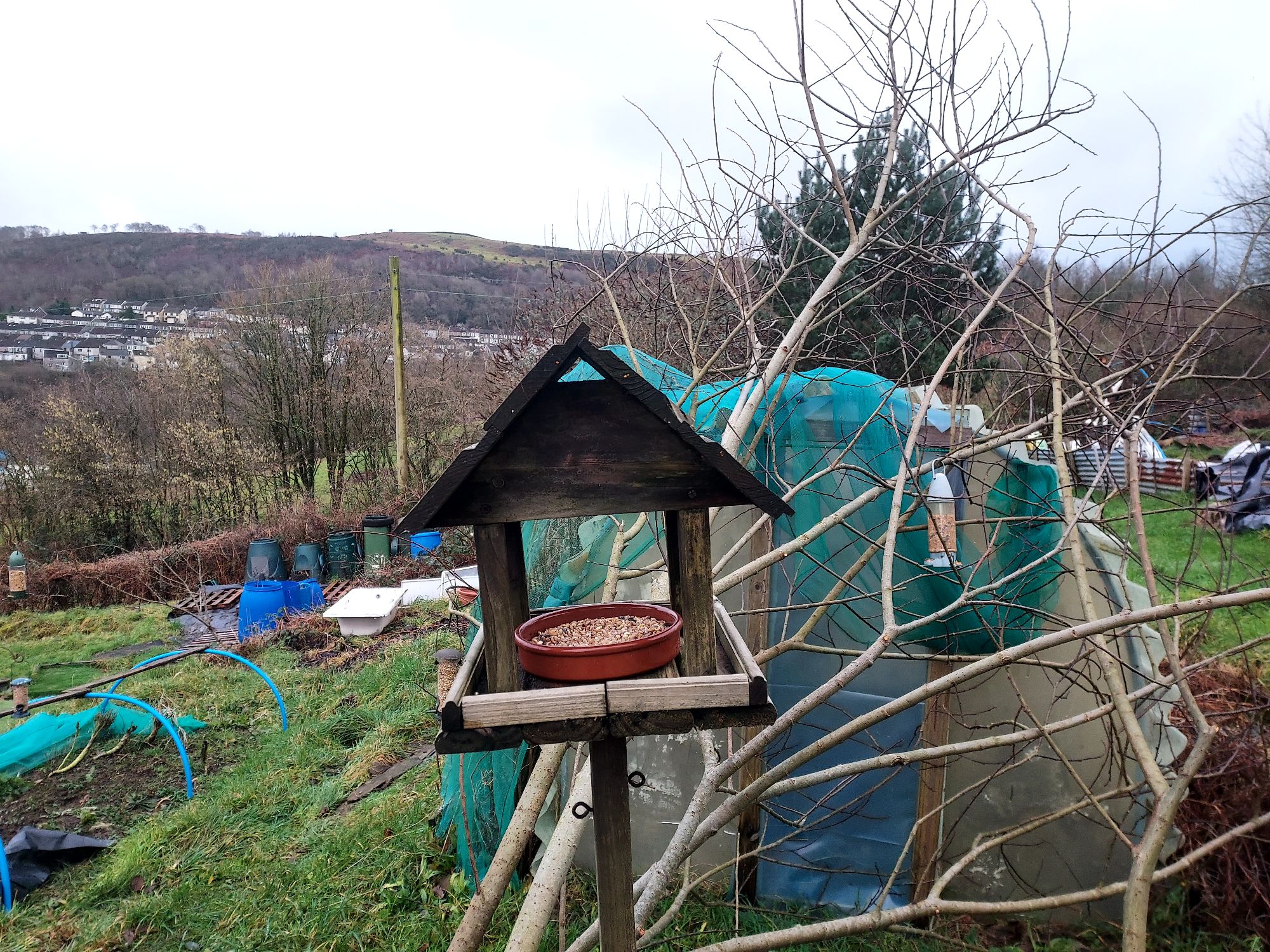
Then finally a fat robin lands jauntily on one of the branches near the feeders, hopping comically up and down, looking some combination of furtive and confused at the newly placed seeds, before finally discovering a small pile I have placed on one of the branches and tucking in heartily.
You can always rely on a robin.
We joke that he will probably be the only bird we see, and for a while it feels as though this is startlingly close to true.
The skies continue to darken, and the wind has come up – not the most inviting day for man or beast – but we hunker hopefully over our hot drinks.
We study the pictures of some of the birds we might see, talk about the differences between the collared dove and the wood pigeon.
Notice random shapes on the horizon and the colours of houses.
(See also- The 10 second brain spa – how micro moments can calm and fuel the brain)
Though there is no hint of action on the feeders, we can hear the birdsong all around us – much of it robins, but with blackbirds and various tits mixed in.
A birdsong that is faint, and on the edge of range, is identified by my bird app as a Grey Wagtail.
A wood-pigeon coos somewhere nearby – it’s one of my favourite sounds – and it diverts a small stream of calm, together with images of camping and holidays into my brain.
As we sit, we soak in the melodic interludes of song, accompanied by the ethereal swish of the wind through bare winter branches.
So much invisible life is going on around us on this drizzly, apparently inhospitable winters day. The multiple micro creatures sheltering from the cold are scuttling in and under the broken fence panels, and occasional busy flutterings and scramblings can be heard from the brambles behind the shed. Every now and then a fat pigeon swoops overhead, and birds of prey call eerily as they wheel on the far off horizon.
You can smell the rain in the air, the damp chill freshness, combined with the earthy scents of woodchip and old mud encrusted pots.
As we sit there, bereft of bird sightings, I realise that in terms of what the experience is giving us – it doesn’t matter.
We are immersed in the soundscape of the winter birds – we are sharing their space for sixty precious minutes. We are both exposed to the elements and cocooned by the senses of winter nature.
This realisation may not be helpful for bird statistics, but it is joyous to realise that you don’t even have to be a successful spotter to reap the incredible mental and sensory rewards of concentrating on nature.
As if by giving ourselves permission not to see anything, we have actually willed the birds to arrive, we are shortly treated to two blackbirds darting in and out of the thick hedging at the very bottom of the plot.
They are followed by a lone bluetit, spotted near the mid-way feeders, which proceeds with a flash of blue directly over our heads. Another lands in the feeder which is literally next to the door of the shed, and we hold our breaths, watching its tiny colourful head dart industriously as it selects its bounty.
A bright shiny magpie flies tantalising close, looking like it might alight on our wild corner of the mountain at any moment, but it disappears into a nearby tree.
The sky has continued to darken, and the wind has strengthened again – we are now in the last ten minute stretch of our bird watch, and fingers and toes are starting to become cold and numb.
As a very faint drizzle starts, there is movement in the large buddleia bush towards the end of the plot. It is swiftly joined by further movement in other parts of the bush, and as we focus in, we see the distinctive white head stripe of a long-tailed tit.
Another joins it, and then there are three, then four, then five, bold and distinct, elegant tails fluttering, and providing balance on the delicate outer branches of the bush. I wonder what mixture of aphids or moths eggs or other food source must be abundantly supplied by the buddleia.
Or whether perhaps this is simply the Welsh valleys long-tailed tit AGM.
As our time is just about to end, one perky little fella flies out of the bush and hops comically around on a telegraph line for a minute or two, as though performing a short Sunday matinee for its companions.
We pack up our belongings swiftly, now all quite cold, and eager to get into a warm house. But cold as we are, we are simply lighter – and happier, than when we left the house.
I’m not sure they believe it, but I always tell my children that another fantastic reason to get out for a walk or into nature, is how lovely it feels to come home again when you have spent time outside, brain and senses refreshed and relaxed.
I wasn’t fast or skilful enough with a camera to catch the little birds in todays display, but then I wasn’t there to capture them – I was there to watch and experience.
Hence my gallery of bird feeders from a variety of angles.
And in a way – they demonstrate my point. Experience of nature doesn’t have to be All Singing All Dancing to be powerful.
(See also 5 reasons anyone should be bird-watching for mood and mental health)
We didn’t see anything startling on our Big Garden Birdwatch, (depending on your definition) but we didn’t need to.
Even if we hadn’t been treated to the joyful arrival of the long-tailed tits at the end of the session – just being there– mindfully watching, connecting to any and all of the nature around us, has palpably shifted our mood and our senses to a higher and calmer place.
It doesn’t take grand vistas and sparrowhawks to be successful in experiencing the outdoors (though they’re lovely when you can get them).
It takes tuning in to nature, the senses, tuning out the noise of life, even for a few minutes.
People like to say of alternative ways to nurture mental health that remedies aren’t “A magic pill”
The thing is, nature really is one.
 bewilderbrain
Thoughts or ramblings welcome here…