Numerous studies support the fact that bird watching can help lift our mood and improve our mental health.
Watching birds can alleviate symptoms of depression and anxiety, it can calm and relax us…it can nurture our souls…
So what exactly is the mystic power of one of the worlds oldest hobbies?
I used to be intimidated by people who watched birds. They seemed to have specialist equipment, peculiar habits, and most worrisome of all, an absolute gamut of unfathomable knowledge.
Much of it containing silly names.
Birders, twitchers, or whatever nomenclature is de rigueur in the modern community of avian observation, seemed to me to be another species, and there was no place for a chaotic and impatient soul such as myself in such an organised and pristine community.
This of course, was utterly ridiculous.
Equipment? training? books? hi-tech binoculars and cameras?
Yes, if you like, sure.
Or you could go for a walk and look at a blackbird.
I’m quite sure there are people out there with charts and clipboards and sketchbooks, spending dedicated hours on end with seeds on their heads and wearing dungarees woven from moss and well-rotted manure, but I really don’t think this type of behaviour is essential.
I remember when I was young, bird watching being considered the arena of the geeks and outcasts (these days more likely to be embraced as making it enticing anyway). It bumped comfortably up against train spotting, which maybe does still have to find its modern niche…but i’m happy to be corrected.
Either way, the movement towards recognising the mental health benefits of nature has immeasurably raised the profile of The Twittering Folk. (hmm, I think not, sounds like bad seventies kids programme or a folk horror).
So why exactly should we watch birds to improve our mental health?
Well firstly, the real beauty of bird watching is simplicity, and its utter lack of expectation.
1. Birdwatching is simple, undemanding, accessible to anyone
A great friend of anyone struggling mentally, or the neurodiverse…
The sheer simplicity of birdwatching opens doors to escape which would otherwise be too arduous to push
A pursuit as old as the hills, it echoes their ever present sanctuary
The simplicity of watching birds is a huge appeal for anyone who needs to boost their mood, but for reasons of depression, anxiety, or neurodiversity, may struggle with the motivation to take action…
You do NOT need equipment to watch or listen to birds. Maybe a coat if its raining… go on then.
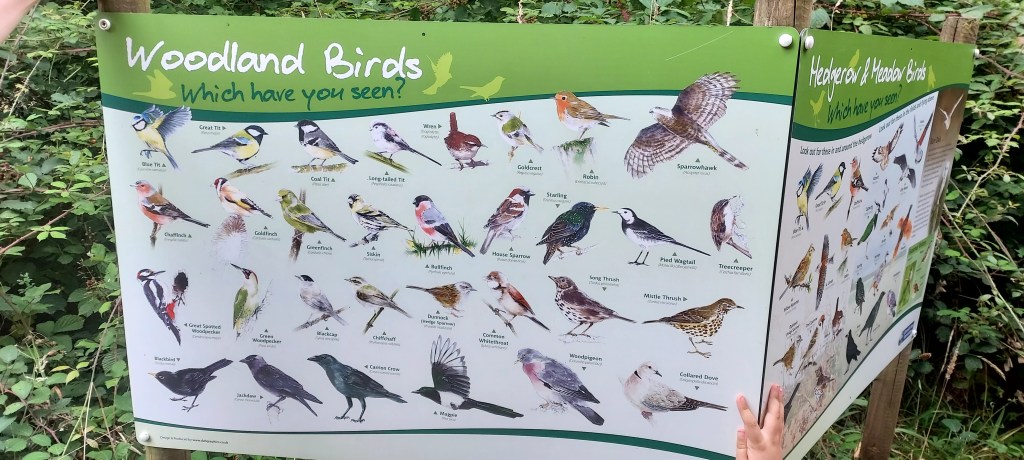
You do NOT need to know the birds you notice to enjoy watching them, or to have memorised twenty bird species…Knowledge is optional…
You do NOT need to smartly presented. In fact I don’t suppose the birds will care if you have gone in your pyjamas. Or indeed watched from your garden or window.
You do NOT need to mentally prepare yourself/ get buoyed up/ be in the correct mood to go and watch birds.
In fact, a low mood is the perfect time to ask nothing more of yourself than to step outside the door.
There is NO expectation in return.
The birds are unlikely to care if you have seem them, or if you have spotted them doing a mid-air poo, (which makes them infinitely more appealing).
There is no one you need to report back to on your findings, or keep score with.
And in fact, weirdly, bear with me now, even actually SEEING birds, is not essential to the pastime of birdwatching.
It is all about being there, pursuing something outside yourself…
Which leads on to… Engagement.
2. Engagement with nature, and with new or specific activities like watching birds has been proven to improve mental health
For those of us who struggle with anxiety, depression, or feeling overwhelmed by the day to day, we can start to become removed, apathetic, or so consumed by internal stressors and worries that we are unable to enjoy life…
Bird watching is like opening a window from a busy or struggling brain.
It lets the light and fresh air in, removes us from our thoughts, and allows us to live in the moment…
Back when I was first discovering walking as a remedy for anxiety (see Two Bats and a Squirrel – The birth of an ADHD walking Diary) I started to stop and notice birds for the first time.
I was struggling mentally at the time, and began forcing myself to take early morning walks in February, in hopes that the exercise alone would boost my mood.
I discovered that walking has far greater powers than the exercise alone, but on one of these very early walks I have quite a striking recollection.
It was barely dawn, cold, thick grey skies, and as I plodded along a local street, willing myself to feel better, I was feeling singularly uninspired.
I was wrapped up against the cold air, but I was also mentally wrapped up against the world in general. Unwilling or unable to let it in.
As the sky grew infinitessimally lighter, I heard a bird singing. I had decided a few days ago that maybe I could try to learn to identify just one or two basic birdsongs.
Such a simple thing, and something that our ancestors would have known without even thinking about, but something from which we have become far removed.
I had started with the most widely heard songs, and as I listened with my newbie bird ears, I felt sure it was a blackbird. A moment later it landed, boinging up and down a bit, on a telegraph wire just across the street from me.
It was just me and that blackbird on the grey dawn street, and it looked straight at me and started to sing again. I can’t completely put into words the strange little swell of feeling that filtered through me…a warmth, an awareness, like a window being opened for a moment and the light coming in…
Engagement with nature and with birds can be taken one step further should we seek to actually start learning about bird species, habitats and songs. Or indeed any other aspect of nature.
Learning something new fires up different pathways and synapses in the brain, provides a sense of accomplishment, and empowers us with a feeling of new knowledge, however small that may be.
Like learning a single bird song for instance.
For reward seeking brains like mine, this engagement with nature and birds provides another fuel for us, in the form of…
The Thrill of The Chase…
You never know what you may or may not see when you seek to watch birds, and the unknown, expectation, can stimulate excitement.
Moments of discovery do something very particular to the human brain…
There is an anticipation and unique focus with trying to spot birds, and the brain actually rewards our efforts with a dopamine hit when we see or identify one…
Invaluable medicine…
Spending time in nature has a now well proven effect on reducing anxiety states, having been shown to to lower cortisol levels, blood pressure and heart rate. Watching birds has the same physiological effects, so when you watch birds while spending time in nature, you are getting a double whammy.
Being engaged with nature has also been shown to promote creativity, and adding in drawing, listing, writing, or photographing nature, can further enhance our engagement if this is something we feel drawn to.
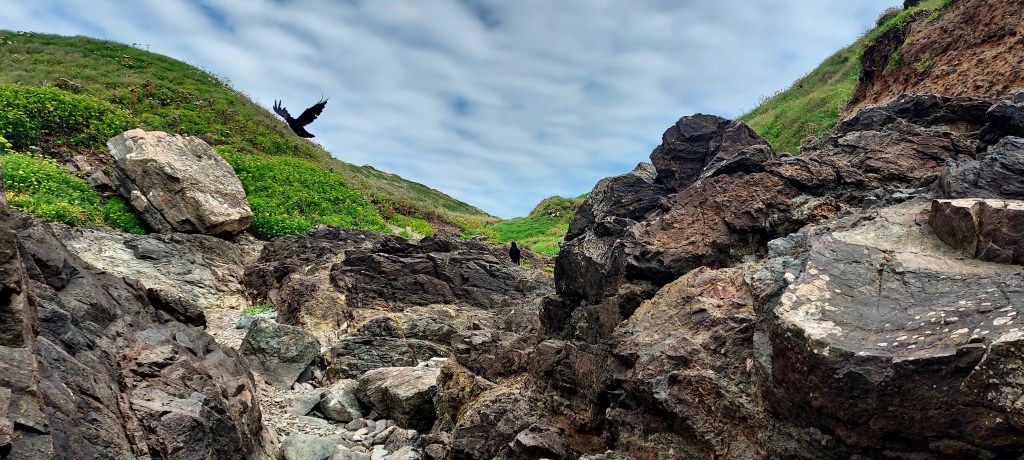
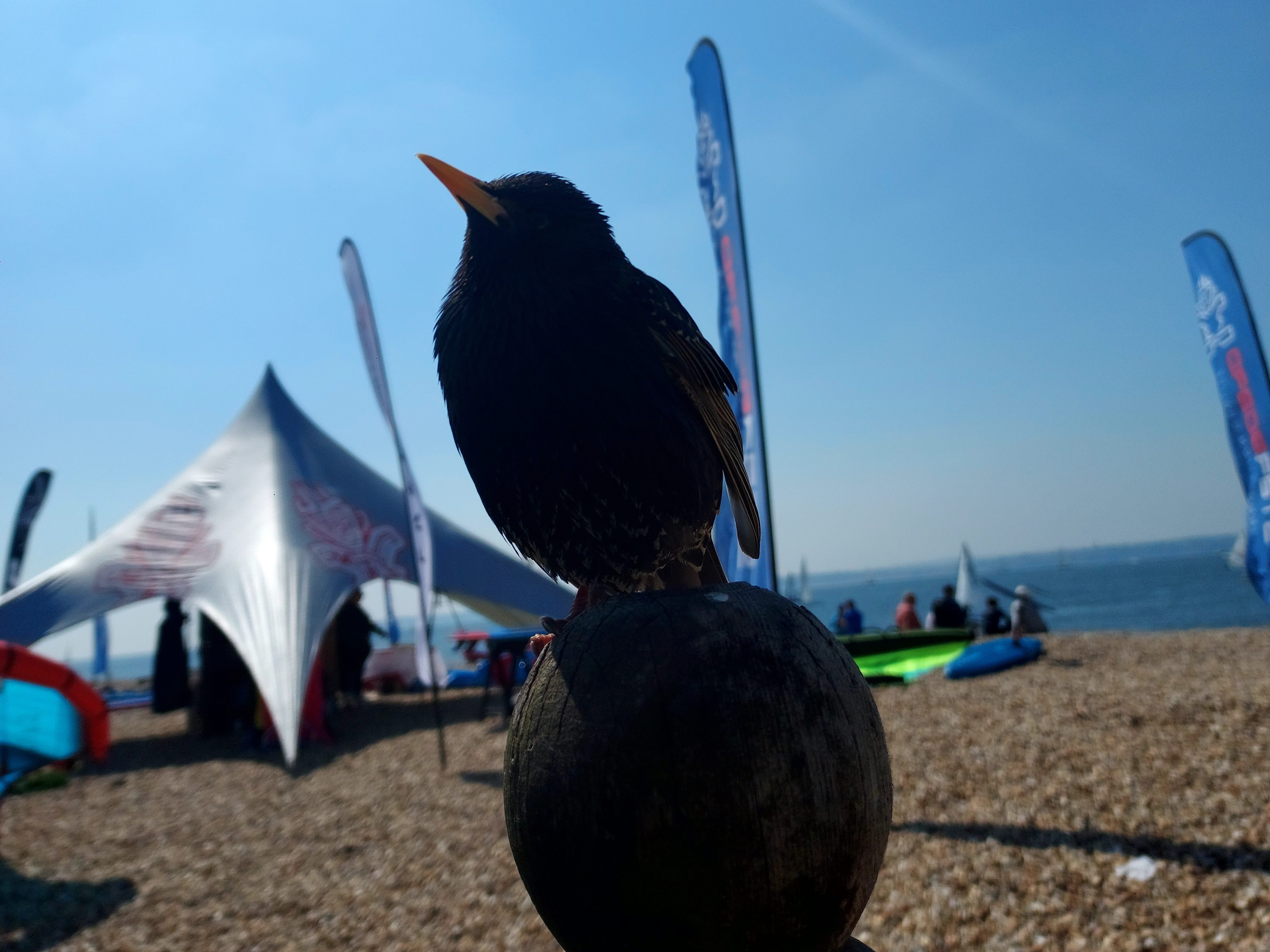
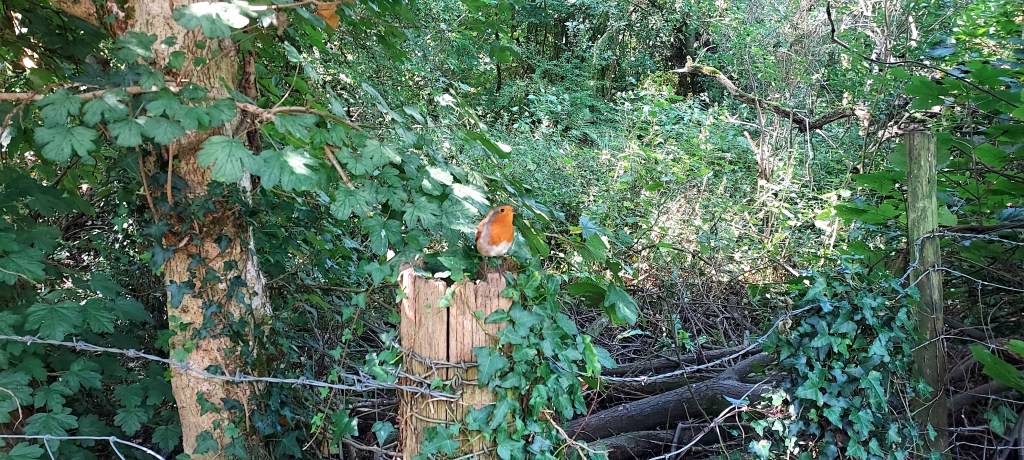
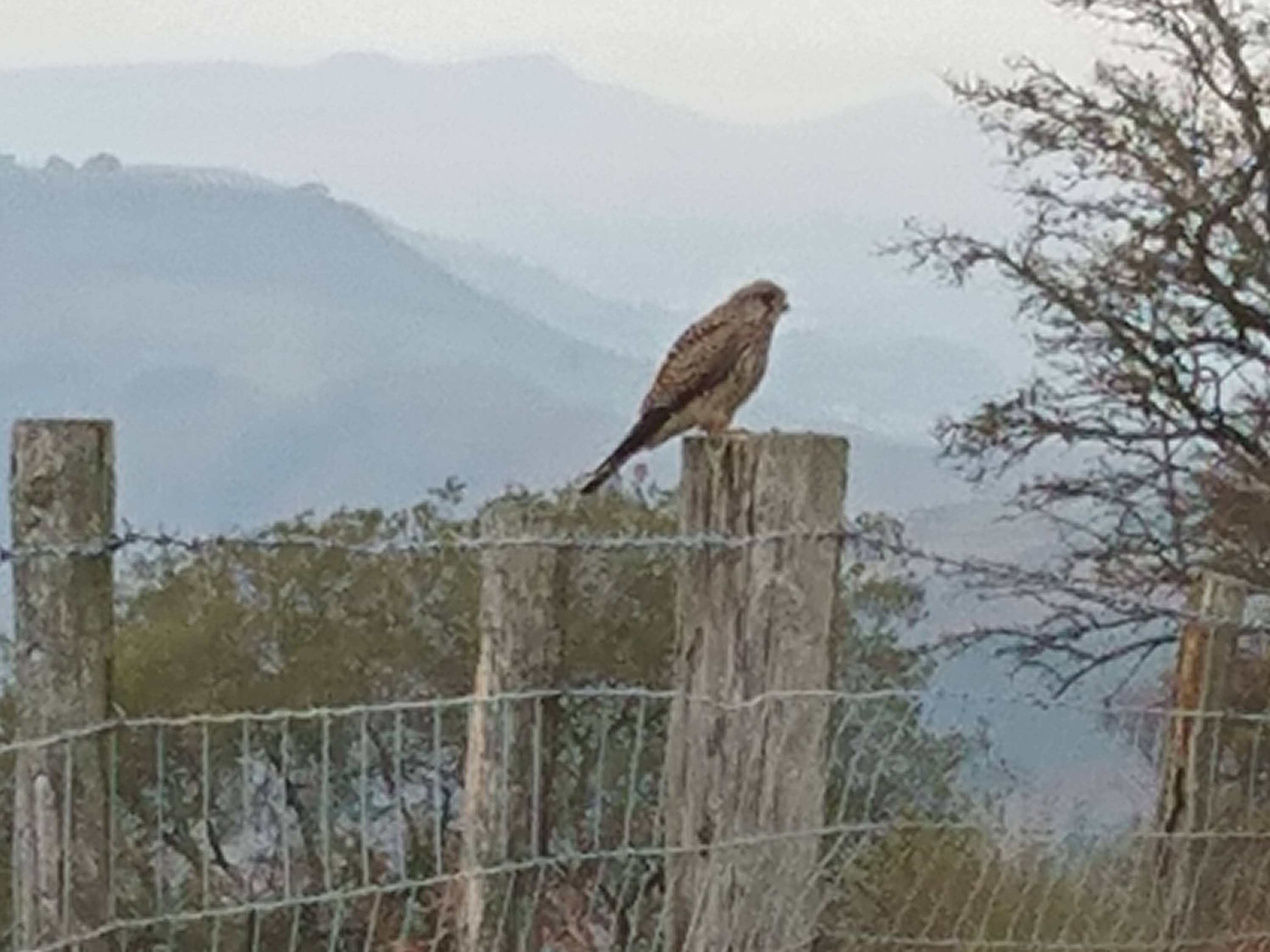
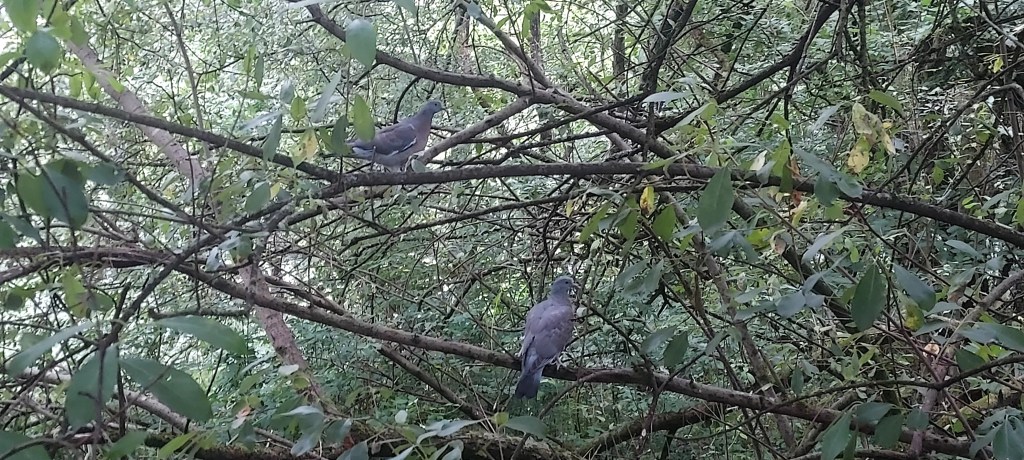
You will note that all the pictures of birds in this piece are either far away, slightly blurry, or both. Majestic close ups of tits on a sunlit branch…it does not have.
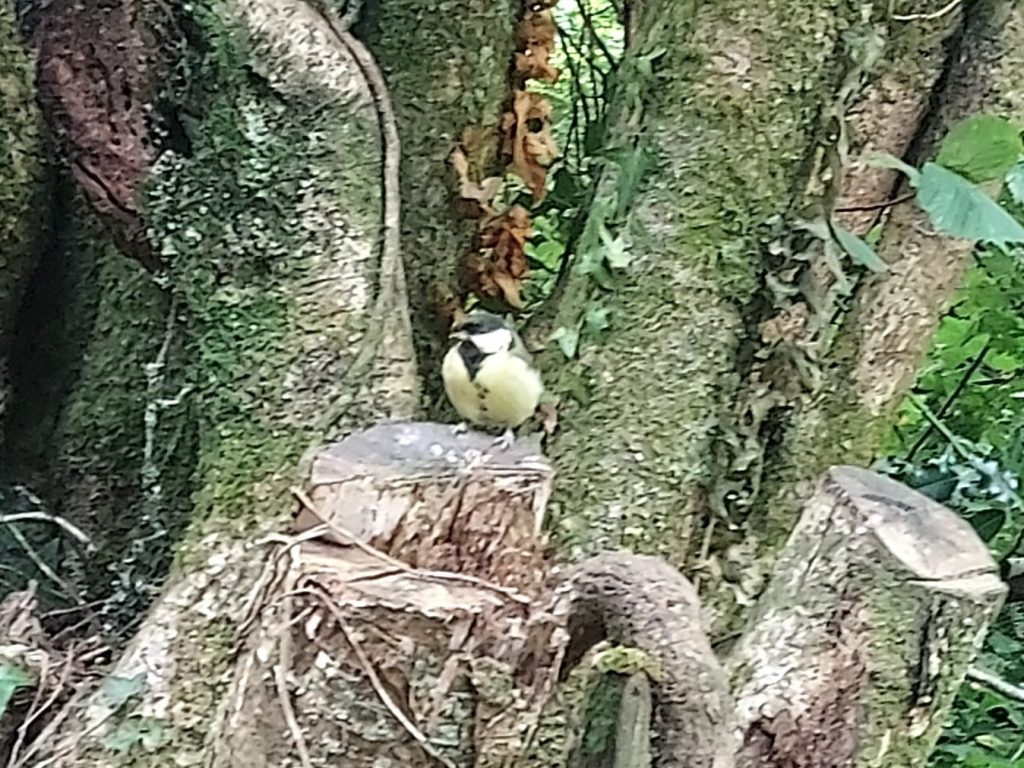
It turns out I have been trying to take pictures of birds for many years now – they are rarely very good.
(Though the far away black birds you see as the main picture are actually Choughs, spotted in Cornwall, so I’m pretty pleased to have captured them at all.)
But you see, this doesn’t matter. It’s the creative act of trying something, not a perfect or expert end result, that is good for the old noggin.
When we engage fully, sometimes being interested or distracted despite ourselves, apathy and inertia are thwarted; we are removed from our own headspace, instead becoming part of the world around us.
Which brings us to… Mindfulness.
3. Birdwatching promotes a state of active mindfulness that filters out other noise and calms the brain…
For those of us that find it hard to sit and stare at a rosebud on a spoon for an hour…
This is something different – a sort of active, relaxed concentration… at once distraction and focus, that acts to slow or still an anxious mind…
I have never been able to meditate, and relaxation of any kind is difficult for a mind that works like mine does.
I have learnt that you can’t always slow down internal chatter or anxiety by trying to remove various inputs or stressors.
The holes made by completed tasks or removed stimulus have a tendency to be automatically refilled from the bottomless mental distraction tank.
What CAN work, I believe, for neurodiverse or anxious brains, is to impose a new and all consuming stimulus or distraction over the top.
A sort of thoughts overlay, if you will.
I approach the end of the summer holidays, and indeed the end of summer, I must confess, from a place of not having looked after myself brilliantly well.
High stress levels have led to unprecedented cake levels, chocolate levels, crisp levels and sitting down levels.
I have walked too, of course, but not as far, or as often as I would have liked. Bear with me, this does have a totally bird related point… I promise…
A few days ago, in an earlyish morning of the fourth heatwave of the year, we needed to pull ourselves out of the house to get some fresh air and exercise.
It was very hot, so we opted for the wooded shade of canal and riverside walking at the beautiful forest farm. We packed a fairly rudimentary but perfectly adequate picnic, and set off.
But I was tired. Tired, weary, irritable, brain overloaded with the myriad of things I needed to think about before getting the kids back into school. I didn’t feel like I had the brain space to enjoy or relax into our walk.
By contrast, I also felt like I had far too much body space, having eaten as much cake as I have in recent weeks, and it was going to be a great effort to propel the weight of my own bottom in the forward locomotion that is typically required of walking.
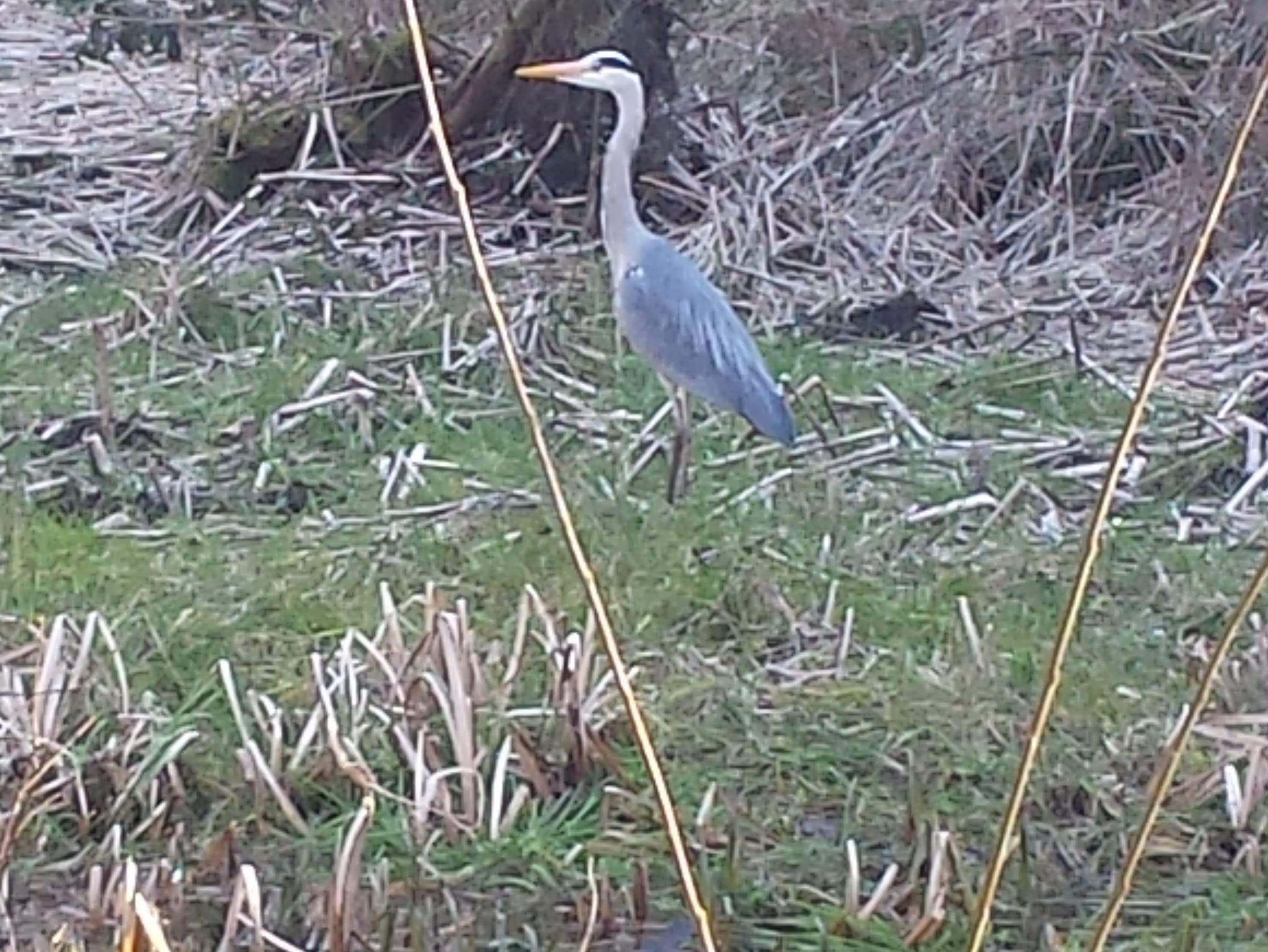
At forest farm, there are bird hides, and in the first one we were treated to Moorhen chicks, fluffing right the way up to us from the reeds, pecking for dropped seeds. The second bird hide yielded a heron, standing, observing something intently in the midday sun, on the edge of a pool.
Finding a shady spot close to the canal to eat our lunch, the kids played in a tree. A jay flew briefly in and out of view on the other side of the canal.
Someone had placed bird seed on a couple of fence posts a few feet from us…and we just…watched.
There were plentiful helpings of bold robins and furtive great-tits, but then we were inundated with…
( I’m going to use a measurement developed by my kids now, it seems to be some kind of advance on the metric system )
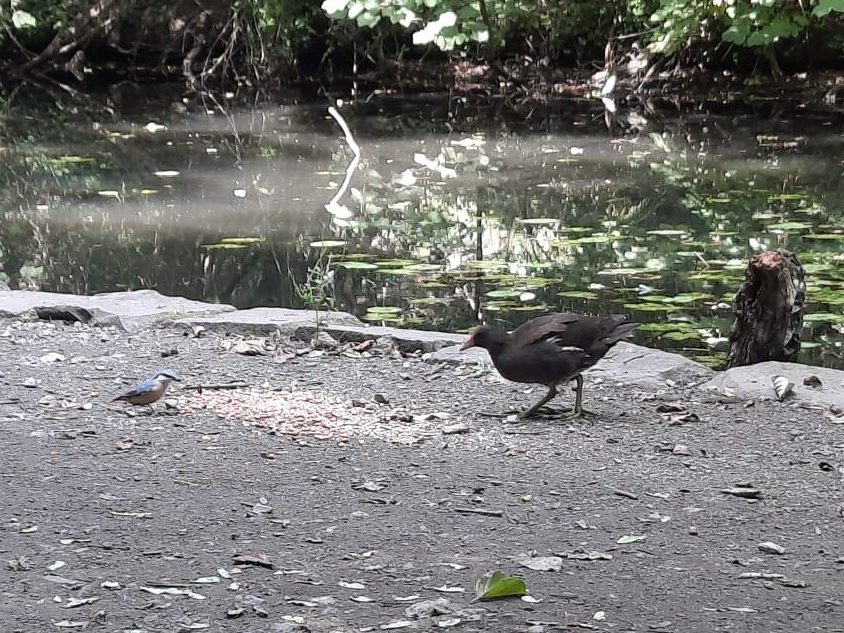
…. a butt ton of nuthatches.
That’s right.
At some point during the chomping of a cheese sandwich and a cup of tea, I had ceased to be wound up when one of the kids suddenly squeaked or shouted loudly, ceased to notice the oncoming dog walkers other than to smile and nod, and most of all ceased to be entirely consumed by my thoughts.
I was just watching the nuthatches. Darting back and forth, hopping over to a pile of seeds, fluffy creamy white underbellies and dusky blue backs, and their most excellent go faster eye stripes.
I was absorbed…
There is something about watching birds that can, for a time, just hold your attention. Their movements hold enough of the unknown to keep an inquisitive or restless brain on its toes, or to light a spark of interest in an apathetic one.
It is thought that bird watching can induce a state known as psychological flow, which is a state of deep absorption in an activity.
It’s characterised by intense concentration and a sense of total involvement, which, due to the calming and regulating effect on the brain, has the potential to improve symptoms of anxiety and depression.( see also Creatures of the senses – why nature is the perfect therapy for neurodiverse brains)
This flow state, produced by curiosity, intense interest, and engagement, can actually produce endorphins in the brain, providing a sense of satisfaction and enhancing overall wellbeing.
It also has the capacity to improve focus and concentration over time – something which could have a profound impact on those of us with busy brains.
During those moments of concentration… the background noise of the world, of thoughts, of stress, is filtered out, and we are actually just there….
Standing in the woodland watching an indiscriminate brown jobly in a tree.
And yet it’s magnificent.
It doesn’t matter that we’ve only seen a blurry flitting blob which may or may not have been a bumble spotted windflapper, all that actually matters is that we are focusing on that moment right there.
Bird watching can be gentle, trance-like, but this absorption holds a quiet power. Time can disappear.
So being curious, watching, concentrating, engaging, learning, being connected, are all in their own way capable of chemically moderating or enhancing our mood and mental state.
But another aspect of birding that has the power to add to this is, of course, birdsong…
4. Birdsong has a proven ability to lift mood and calm the brain…
Birdsong does something a bit special to the human brain, it has a genuine magic power, with an evolutionary track record…
Studies have shown that birdsong can have a profound impact on our sense of calm and wellbeing.
There is something about the gentle melodies floating through a sunlit window on the breeze that tells us… Breathe. All is Well. Come outside and let nature surround you…
Interestingly, the experience of the sound of birds is highly subjective. Some loud or sudden bird sounds such as the caws of magpies or rooks (poor unloved corvids) can be found jarring or startling, and the bird sounds which affect us positively are also influenced by our own history and beliefs.
I love and feel comforted by the sound of the owl hooting on the mountain behind us at night…others find their ethereal calls spooky or the wild calls of a bird of prey unsettling.
For most of us, the bird sounds that have been found to be most calming and uplifting are the gentlest, and most melodic ones. The closest in resonance to music, which makes sense when you think of the incredible positive impact music can have on the brain.
I adore the sound of a song thrush, whose crystal clarity is mesmerising, but whose vocal range is also incredible, weird, and at times quite comical.
But then possibly my favourite bird sound is the simple old wood pigeon. To me, that coo is a sound that is instantly evocative of summer, of days growing longer, of camping in dewy grass on a hazy sunlit morning.
Our natural draw to the sound of birds may have an evolutionary basis. Studies suggest our desire to be in nature may be genetic – built-in.
In ages past, abundance in nature would have been tied to abundance in food, and shelter.
The calming sense we get from the sound of birds is believed in part to be due to this evolutionary sense of safety. Birdsong would have indicated the presence of the water, plants and animals that would be needed for survival.
Birds also tend to fall silent when predators are near, to our ancestors therefore, a silent environment may have invoked caution, hypervigilance, raised cortisol.
By contrast, the sound of melodic, abundant bird song calls to us across the centuries to tell us our surroundings are safe.
Another theory holds that the sound of birdsong, much like concentrating on watching the birds themselves, can offer a positive focus for parts of the brain.
The pleasing background sound of birdsong may use up, or create focus for, one busy brain frequency, which will better enable other parts of the brain to relax or to complete tasks without distraction.
Ultimately, it doesn’t matter which bird sounds you are drawn to, or indeed whether you can identify them. You can simply indulge your senses in the soundscape birds create and reap the reward of its calming therapy.
This freely available, bountiful therapy, available right there outside our doors, brings us finally to…Gratitude.
5. Seeking and observing the beauty of nature and birds instils gratitude…giving an uplifting perspective on our own lives
Being in nature reminds us of how fortunate we are, of the things we can feel glad about every day, birds, flowers, season change, sunrise…
It allows us to bathe in the beautiful, the fantastical and sometimes the other worldly, taking us to a magical place beyond our own worries…
Watching any kind of wildlife is an honour and privilege, and you should seek it wherever you can.
Tapping in to this sense of gratitude, of the gifts that engagement with nature can offer us, also promotes in us the desire to give back...
As we engage more with nature, we feel more compelled to pro-actively protect it. To play our part in responsibilities or activities that can mitigate climate change, that can protect species…that can educate.
This desire to give back is uplifting and empowering in itself.
We can do ourselves and the natural world good at the same time.
And everything helps here, whether you are putting out bird seed, or planting bee friendly wild flowers, or volunteering at a local woodland or RSPB reserve. Pat yourself on the back too, for whatever you feel you can do.
Nature is superpowered, if we look after her.
And why birds in particular?
Mankind’s centuries long fascination with our avian heroes continues for a reason.
For one thing, they can fly, which is pretty awesome, and something not many of us can do.
Being descended from dinosaurs, they are also a living connection to our prehistoric world – which is pretty powerful stuff – and possibly explains that sense of timeless magic they can give you when you watch them.
Birds have such huge and unique personalities and quirks.
They are curious, funny, shy, clever, beautiful, and forever mysterious creatures.
Watching birds genuinely fosters its own kind of joy.
You really can take birdwatching as seriously or as lightly as you’d like.
And you know what? lets find interest in every type of bird.
Let’s include all the little brown jobs, but also all the clever corvids, crows, ravens, magpies. Lets include the noisy seagulls we so often ignore. Lets include the fat pigeons that can be relied upon to be a feature of almost any walk.
GIVE PIGEONS A CHANCE!!
Just seek out birds. Notice them, wherever, whichever, whenever. And seek the outdoors. You’ll be amazed what it does for your brain.
Open your mind, open your window, and let nature drive for a bit.
Go on, watch a bird. You’d be foolish not to.
 bewilderbrain
Thoughts or ramblings welcome here…