Our brains need magic, it fuels and fortifies, lifts and inspires us…follow your senses…and seek magic everyday…

The low sun sparkled across ice-drop grass this morning, and the first truly frosty breath of autumn brought an inhalation of magic.
Mornings like this one stir something deep in my senses, a slumbering winter goddess fashioned from shiny holly and wild air, smelling faintly of spiced hot-chocolate.
It got me thinking of the magical. Of our relationship to the magical, our sense of wonder in the everyday.
I believe that people with ADHD are drawn to all things magical in life, in fact, that we feed and thrive on them.
What do I mean by magical?
This is so subjective that I think everyone should form their own description, there is no right here.
I would attempt to describe the magical like this:
Anything that sends a peculiar tingle through you, sometimes a sense of rightness, of pure momentary contentment, sometimes a sense of otherness and the beyond, something that inspires and uplifts by connecting us to unique sensations and awareness of the world around us.
The scope of the word, the sense, the feeling – is extraordinary.
But most of our magic – most of anyone’s magic, is right there in everyday life – and the way we perceive it.
As children, most of us are hard-wired to Wonder. It’s our default state.
And the destruction of wonder in this world is not just something to lament – it’s something to fight. Tooth, nail and wand.
ADHD and neurodiverse brains can be child-like in their excitement…
People with ADHD have a strong tendency to appear child-like. We can be confused easily, we can be clumsy, we can misunderstand things which appear obvious to others, we can be innocent to nuance.
Our child-like manifestations however, also include our excitement having literally no bounds.
It could be a holiday, yes, could be Christmas…could also be that we have just realised our favourite programme is on, or someone has opened a brand new tin of biscuits.
Ain’t no excitement like ADHD excitement. (It’s also often accompanied by a dance)

Our looser mental filters, the same zingier brain dynamics, that can make information or situations overwhelming to us, also allow us to access a range of feelings and senses at deeper and more diverse levels. (see also ADHD intuition – the world’s secret communication force – and why we should listen to it)
Too often, due to lifetimes of masking and moderating our behaviours, we may downplay or mute our excitement, even feeling it is somehow inappropriate in adult company.
I mean WHAT, in the name of the ghosts of Christmas past, present and future, has ever actually been bad about being excited?
Some grown-ups never appear to get excited. I don’t want to be around these people.
Some grown-ups get excited about new cars, big social occasions or having fully organised their finances.
I am not going to judge anyone’s reasons for being excited.
AS LONG AS YOU BLOODY WELL DO SO.
I would rather be around a person who is buzzing with excitement about going to see a band I personally find to be the pinnacle of awfulness, than I would be around a cool, calm and collected character with impeccable taste and no passion.
Excitement isn’t something to be embarrassed about, or that you get too old or too cool for. And anyone trying that hard to be cool is invariably the opposite.
For the love of wood nymphs, ivy-covered castle turrets and never-ending chocolate bars, can we stop placing restraints on our excitement and imaginations?
ADHD brains have an all access pass to magic and wonder.. if we remember to use it…
We are more likely to react spontaneously (sometimes loudly) to sights and sounds, to be taken completely out of one moment, and into another entirely.
Sometimes we can see magic in our lightning fast travel between one mental destination and another, the boundaries of reality temporarily blur, rendering a different, and often inspiring view of a situation, person or moment.
We are caught in that moment entirely, existing on a different plane – and our magical view is like seeing the earth from space.
While sometimes oblivious to literally everything around us, at other times, we will take in all the tiny minute details, spin intricate patterns with them, and re-introduce them to the world as a genuinely new invention.
Our incurable curiosity means that the world is endlessly fascinating, and we will mentally shake it like a snow globe to see what new landscapes may emerge.
Add in our inbuilt empathy, desire to make others happy, and ability to see beauty in the darkest of places, and you can see that neurodiverse brains have the ability to weave and dwell in magic.
Finally, when it happens, we feel this magic, this excitement, with every fibre of our beings. And we only ever want to share this…
Why do we need a sense of magic?
We need it because neurodiverse or not, most of us have an inner child that has been trying much too hard to be sensible for too much of its life.
We need magic as a sense of connection to nature, to the world around us, as something outside and bigger than ourselves.
We need magic in any and all its weird and wonderful forms to distract from the sometimes monotony of the everyday, from the harshness of reality, and to remind us of the beauty in life.
Our brains need a rest, need an escape. Logic, organisation, hard work, daily business and all that – it’s draining.
And what is the point of all that work if we can’t let our minds go, let our feelings and senses take over, and be swept along in the magic of a moment or a season.
For those of us with kids, we have an incredible opportunity to allow magic into their worlds. Amidst sometimes volatile outward realities, fostering a rich inner life of imagination through books, through nature, through humour, stories and silliness feels utterly invaluable.
It feels like we should enjoy and explore every second of their default state of Wonder for as long as it lasts – creating magic for them wherever we can.
And lets not imbue our kids with the idea that they must suddenly be sensible, and that all magic ceases as they get older… because it doesn’t…and why would we have them believe this?
Sometimes we need to allow ourselves to follow the instinctive and unrestrained pathways of the neurodivergent brain…
People with ADHD have something of a reputation for being unrestrained in their reactions and their expressions of emotion.
You see, our restraint system, our impulse control, doesn’t work in the same way as our neurotypical peers.
A neurotypical brain may see that it has started to gently snow through hazy winter sunlight, but at the same time it tells itself it’s obviously not appropriate to leave the office in the middle of the work day wearing short sleeves and stand in the road outside with your tongue out.
An ADHD brain wouldn’t see how it would be appropriate NOT to do this…
Follow the ADHD’er…they’ll be the one herding everyone outside..

ADHD brains are quicker to listen to, to respond instinctively, to the magic that can appear in a moment.
They side-step analysis in these moments, vaulting over health and safety requirements and handing their hearts the ignition keys before their brains have detected the subterfuge.
And okay, yes, we have the potential to invoke peril and jeopardy on a bad day, but on a good one, we are the ones that open the gates to other views of the world – more magical ones – even if its for just a few moments.
But to be clear, this isn’t about being deliberately childish.
There are adults who relish the idea of not embracing adulthood, who strive to imbue their activities with what they perceive as childish, carefree insouciance – even to the point that it can translate to disregard for others, or neglect of responsibilities.
And it is not this forced puerility of which I speak. It is not about hiding from the world, from adulthood, or abdicating its responsibilities and ethics.
It is about understanding that being an adult doesn’t mean all the pathways to excitement and wonder have been closed.
Have you actually checked the back of your wardrobe for signs of snow recently?
Somewhere along the road, neurodiverse or otherwise, our senses can become blunted, feelings muted, by the responsibilities of adult life.
Even fun becomes something that needs to be curated, organised, and timed with precision.
I think anyone can take inspiration from the momentary distraction, inspiration, and single-minded vision of an ADHD brain.
It’s about allowing distraction, by mind, or by senses. Not constantly trying to buffer it.
To jump on the train for a moment and follow it, to allow it to bloom into a wonderful destination. To hang onto the rails at the back and marvel at the view into the depths of the forest that is normally hidden.
And the neurodiverse among us need to embrace, not cover, the 50 foot high stained glass window through which life, and its nuances, will sometimes appear to us.
We are creatures of the senses.
Our feelings are electric, our visions are vivid, our imaginations are wild.
When we allow our hyper-senses freedom to roam, they can find more magic in a single moment than some people feel in a year.
And here is the thing…
The more we practice seeing, allowing magic, imagination, inspiration into everyday moments, the more it naturally starts to infiltrate and weave its way into our lives.
Magic begets more magic.
Whether it is sunlight on a leaf, wind in the trees, shooting stars, naughty elves or just the glint in another persons eye. Any and all can be magical, we just have to notice, to realise – with heart, sense, and soul.
When we seek nature, music, art or creativity, we are responding to our deep-felt need for simultaneous sensory input and soothing.
We are fuelling our magical furnace, which allows us to see life through an unfurling layer of diaphanous, iridescent steam – both seeing and unseeing the picture beyond.
Our view of the world, when we let our imaginations roam, unveils hidden shimmers in the deep blue unknown, which ripple outward, bringing magic to those around us.
If we keep fuelling our furnace, we could end up on a snowy express to the North Pole, or perhaps at the very least a cosy pub in the Yorkshire dales…

Fight the ADHD magic fight against Christmas cynicism…
As we enter the run-up to Christmas, many adults become emmeshed in a stew of jobs, organisation and additional stressors.
With an ADHD brain, the responsibilities of this time of year can be especially difficult to handle, and the last train for the overstimulation station left many weeks ago.
Criminally, our child-like appreciation of the magical makes us among the most likely candidates for being excited by Christmas, but we are also incredibly vulnerable, to disappointment, to the stress of organisation, and to the crushing weight that the season’s responsibilities can seem to bring.
There doesn’t seem time amidst the chattering to-do lists, the endless noise and music, the unfolding cross-wired roads of communication and navigation, to actually enjoy the season.
And yet stripped back to our bare states, this is surely what we are best at.
If we can dull the noise, seek help with the responsibilities, squash the perfectionism fairy with a well-aimed mince-pie, we can tune in to our powerful sense of magic.
I’m not talking about candlelit parties, lavish dinners or Christmas fairgrounds here.
I’m talking about tingles of excitement and sensation as the season changes, as the darkness descends and the nights invite us to turn our homes into twinkling cocoons.
I’m talking about quiet walks, crisper, colder air, the sense of something intangible on the cusp of unfolding.
Magical starlit nights with the simple scents of pine and woodsmoke mingling on the streets.
The crunch of leaves underfoot and the song of winter birds on a barer, but more open horizon.
I’m talking children playing in a silent moment of complete absorption in building an imaginary world with lego.
Cats purring, fairy lights reflecting from glasses, deliciously comfortable socks.
Sometimes magic simply looks like a quiet and knowing refuge from the lights and noise and crazy of the season, a sacred haven of rest and repose to restore our overstretched senses.

There is a magic in simplicity, in appreciation, in gratitude for tiny comforts and moments.
And there is the magic that skirts the edges of the senses, if we let it in…
Seeing the world differently, its meanings, the sparks of inspiration that pierce the everyday like shafts of sunlight.
Distant bells ringing with haunting melody…Soot appearing surprisingly and inexplicably in the fireplace….
Our imaginations, and our senses, are wide open places. Sometimes this can be scary, at other times they let in warmth, empathy, flow…and magic.
Where is the harm in allowing unspoken magic to be a possibility, a sense, a feeling, throughout your lifetime?
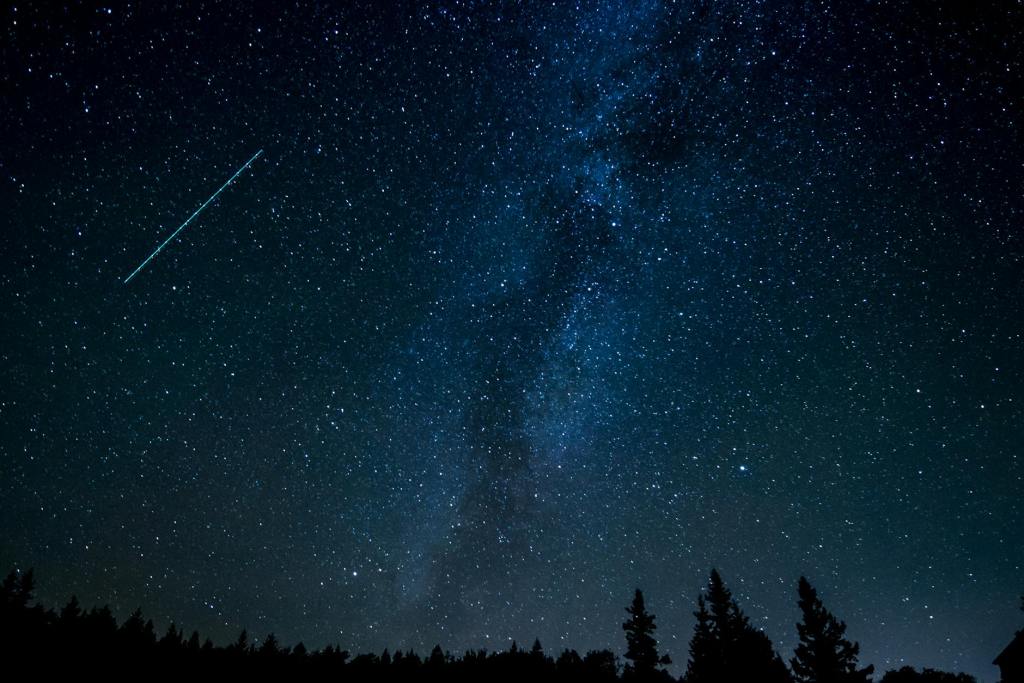
Walking home last November with my children, it was a cold starry night…the air was thick with woodsmoke, and somewhere way up above was a peculiar bending line of bright lights, moving steadily through the black sky…
I have no explanation for this, and nor do I need one. But I do know that I don’t deserve any less magic just because I’m all grown up now…
What is magic but one of the more elusive senses?
An intangible thrill, a vibration from nature and the brilliance of the human brain of the possibilities that exist within and without us.
At this time of year more than any other – slow down if you can -allow your senses to guide and inspire you. The everyday magic will flow if you just open the door…

 bewilderbrain
Thoughts or ramblings welcome here…