
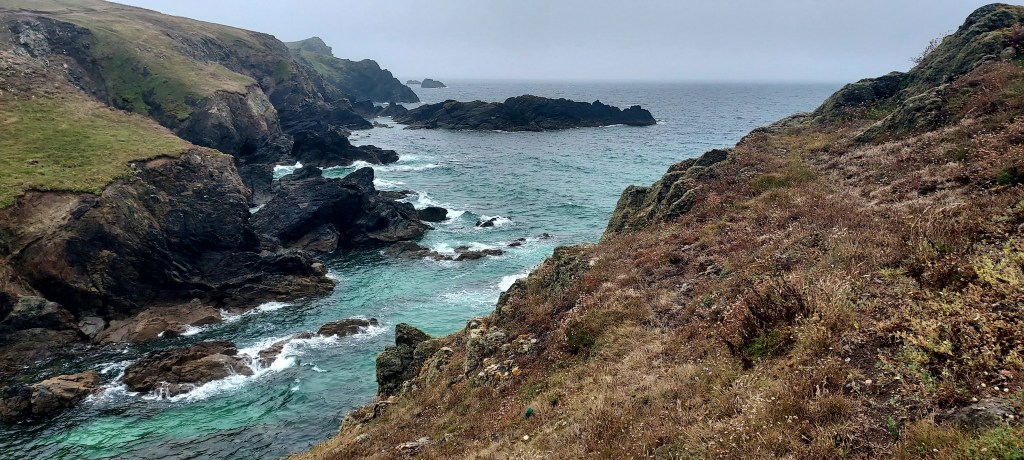
Cornish mizzle, precarious climbing, evasive choughs, duelling sparrowhawks, wild heathland and crashing waves…
Wednesday 3rd August 2025
Walk start time: 11.42am
Walk finish time: 1.25pm
Walk area: Lizard Village to Caerthillian Cove circular
Miles walked: 2.3
There is no walk quite like a Cornish cliff top. And today’s weather has furnished us with that most quintessential of Celtic weather systems, a blowy mizzler.
The walk takes place on the Lizard peninsula, a place now loved by several generations of my family. And such is our familiarity with the character of the weather here, one of my children actually expressed disappointment that the sun was shining at the beginning of our holiday.
It apparently didn’t feel as much like holiday because it wasn’t all misty and rainy and the fog horn wasn’t going.
Today is the last day however, and the weather has delivered us the required atmosphere. Suitably equipped for our short walk with waterproofs, coffees, juices and crisps, we head off down a farm and fieldside track, leaving the scattered groups of tourists in the village to continue determinedly eating ice creams in the rain and mooching for shell shaped souvenirs.
The wind is bracing, to say the least, and we try and keep up a jaunty pace to keep warm.
This is Cornwall at its best, to me. It’s wildest west coast, most rugged landscape, and most unforgiving weather. It fills you with a sense of its wildness, of our own transience in the scheme of this incredible landscape, and humbles you with the reminder of nature’s dominion.
We have a brief stop to look at a sheltered little pool, and the children take the opportunity to climb up and dance on top of some nearby hay bales – well why wouldn’t you? before being encouraged down.
Rounding the next corner on the pathway we start to descend through the mizzle to the cove.
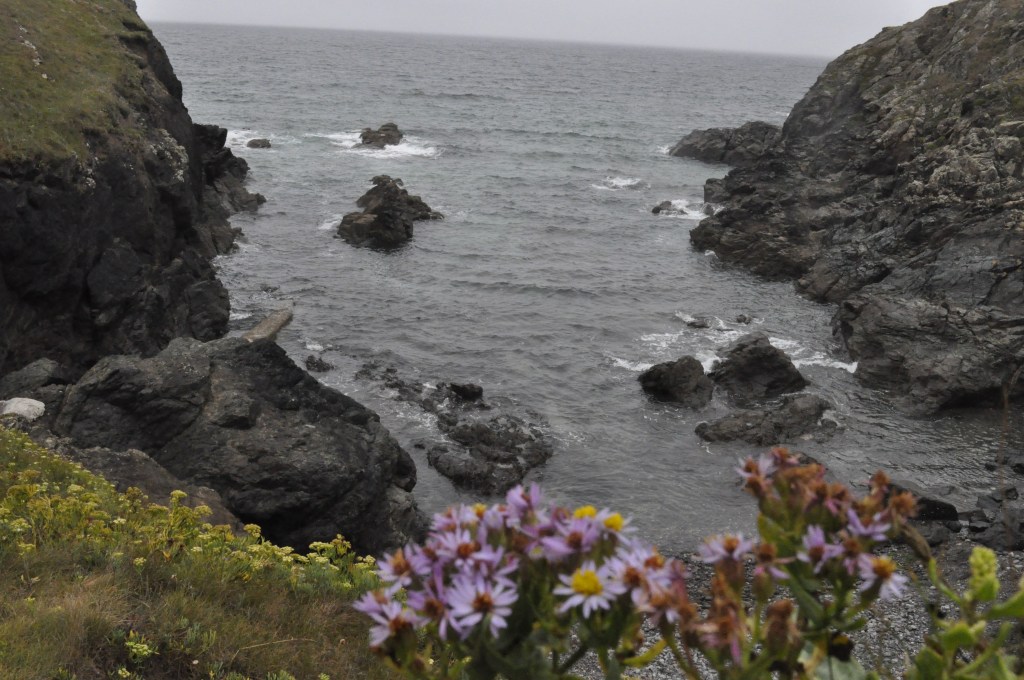
We came here last year, hoping to, and eventually spotting Choughs, to our great joy. We keep our eyes peeled for anything winged…lots of gulls, and more frustratingly the odd crow or jackdaw, raising hopes for a moment before the lack of red beak and feet, and those distinctive wing feathers is noticed.
Incredible geology in an otherworldly landscape…
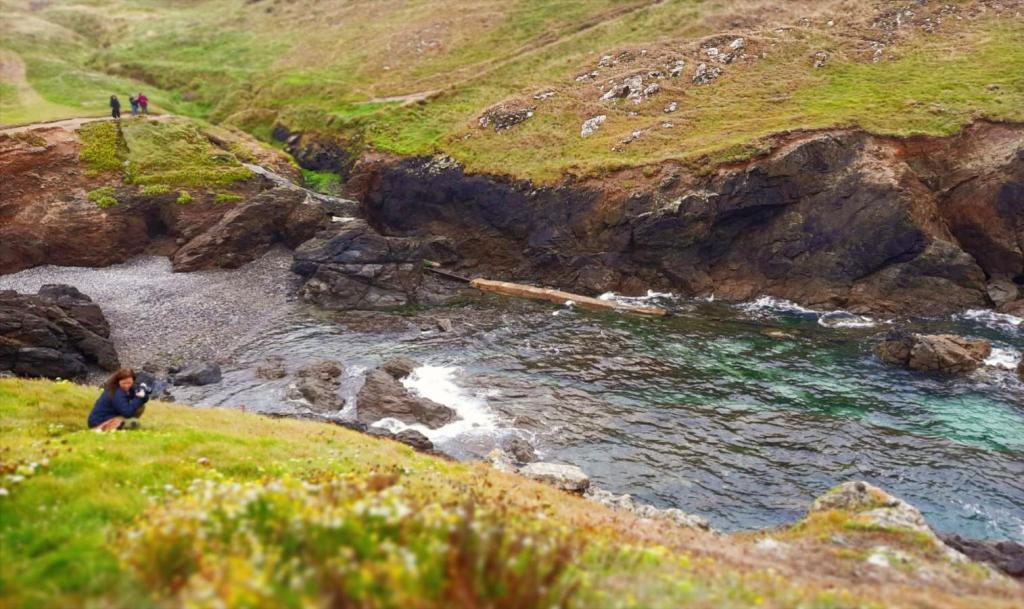
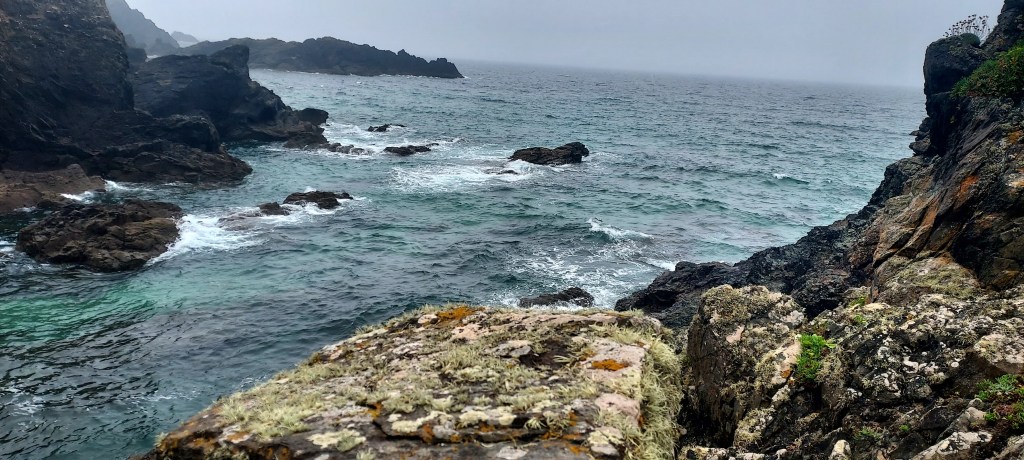
Descending into the ravine of the cove, you need to scramble down a stream bed and between some large boulders to access the rocky beach below. The rock shapes and formations are stunning, the black jagged edges of the serpentine contrasting with soft yellow lichen and delicate wildflowers protruding from crevasses.
I am no geologist, but this peninsula is enough to get anyone a little bit excited about rocks. Parts of the the lizard are volcanic plates and rocks from the earths mantle that have been pushed to the surface by a continental collision millions of years ago.
About 450 million years ago, parts of the current Lizard peninsula were part of an ocean floor, (the Rheic Ocean), that sat between two continents. Millions of years later, convection currents affecting the mantle of the earth altered, causing these two underlying continents to collide with each other.
To attempt to put something which is far, far more complex in relatively simple terms, the result of this was that different levels of the ocean floor and earths mantle, including serpentinite, which originates from as much as 7km to 400km below the ocean floor, ended up being pushed to the surface of the earth.
The land at the lizard represents this ridge line where the two continents collided, and consists of a remarkable array of rock plates and types, often within a mile or two of each other, the deepest and most striking layers being the serpentinite that is only found on the Goonhilly and Crousa sheets in the far south of the peninsula.
To me, this explains a little why parts of the lizard make you feel like you are on another planet. Last year we walked to the remote and not easily accessible Soapy Cove, on the West coast, and it was one of the most spectacular and otherworldly places I have ever been.
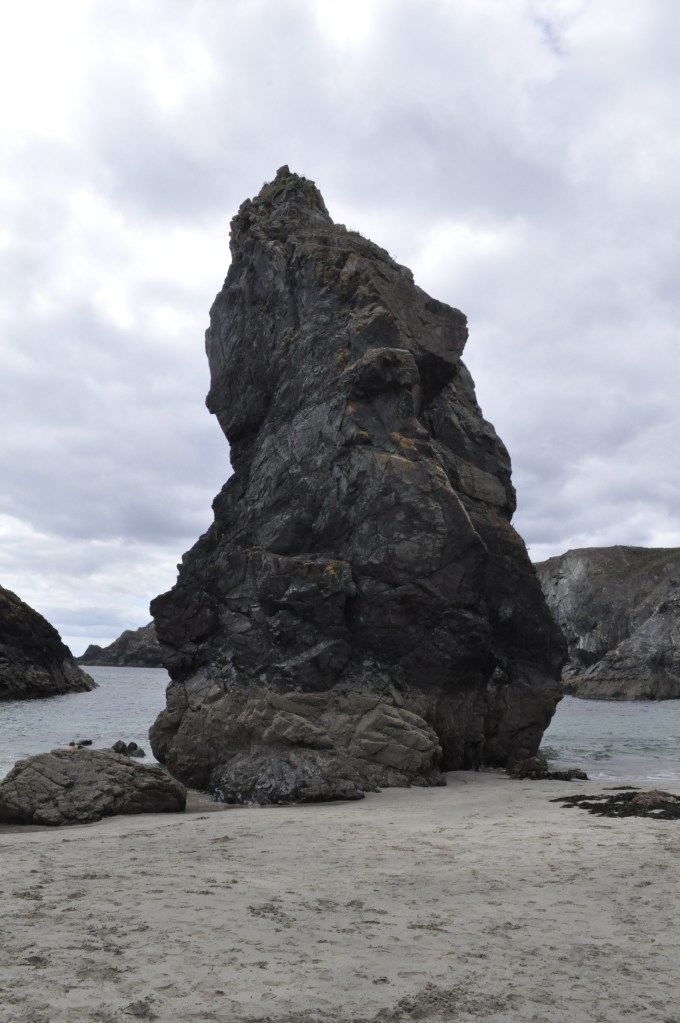
There are rocks in these parts that were never supposed to be on the earth’s surface, and you can somehow feel this in their alien and imposing magnitude. Like this famous whopper, known as The Steeple, at the nearby and unparalleled Kynance cove.
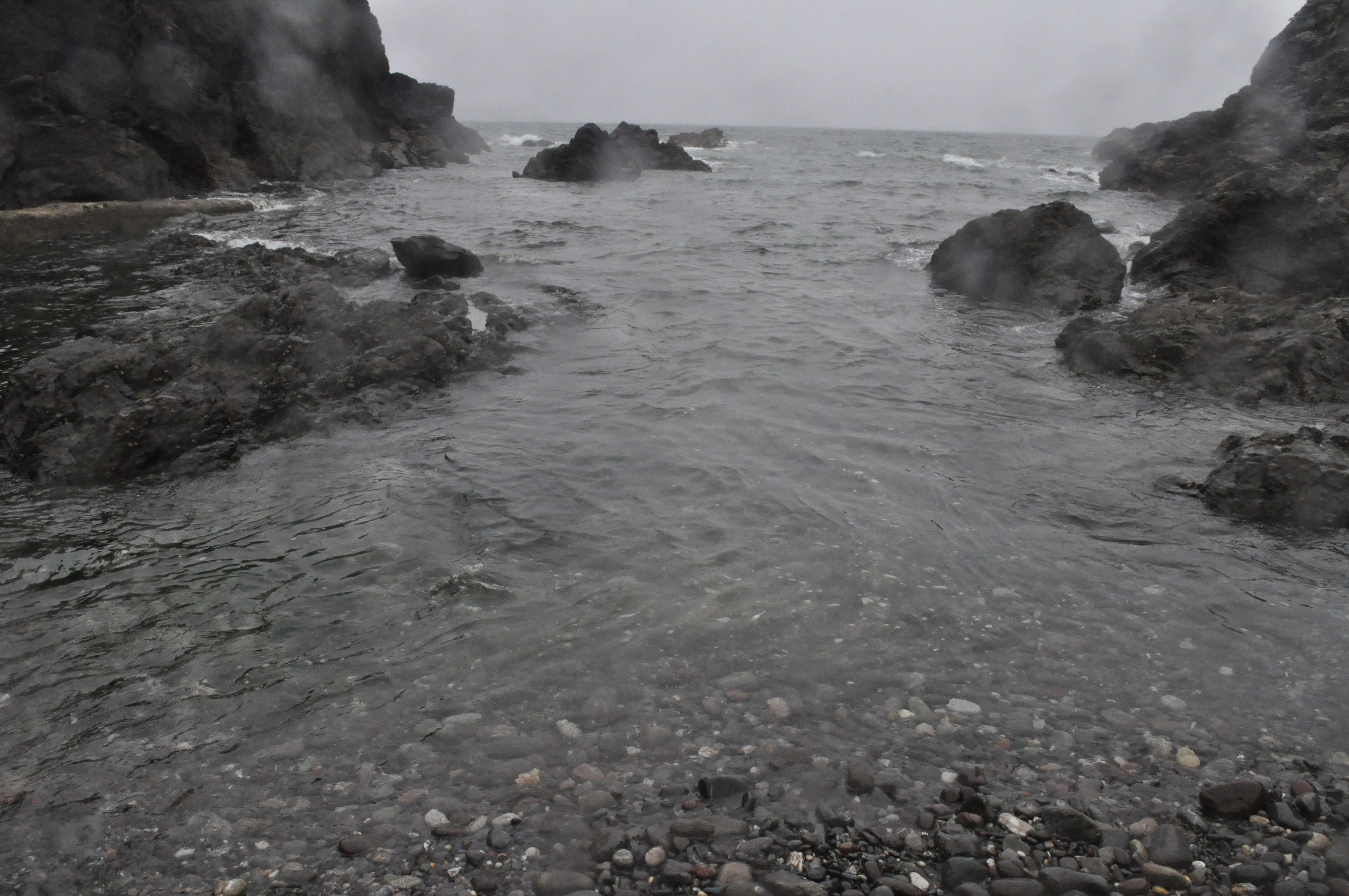
Down in Caerthillian cove, the tide is coming in, and I perch cross legged on the shore, obsessively trying to capture the little swells of wavelets over the pebbles as the lens of my camera accumulates droplets of water.

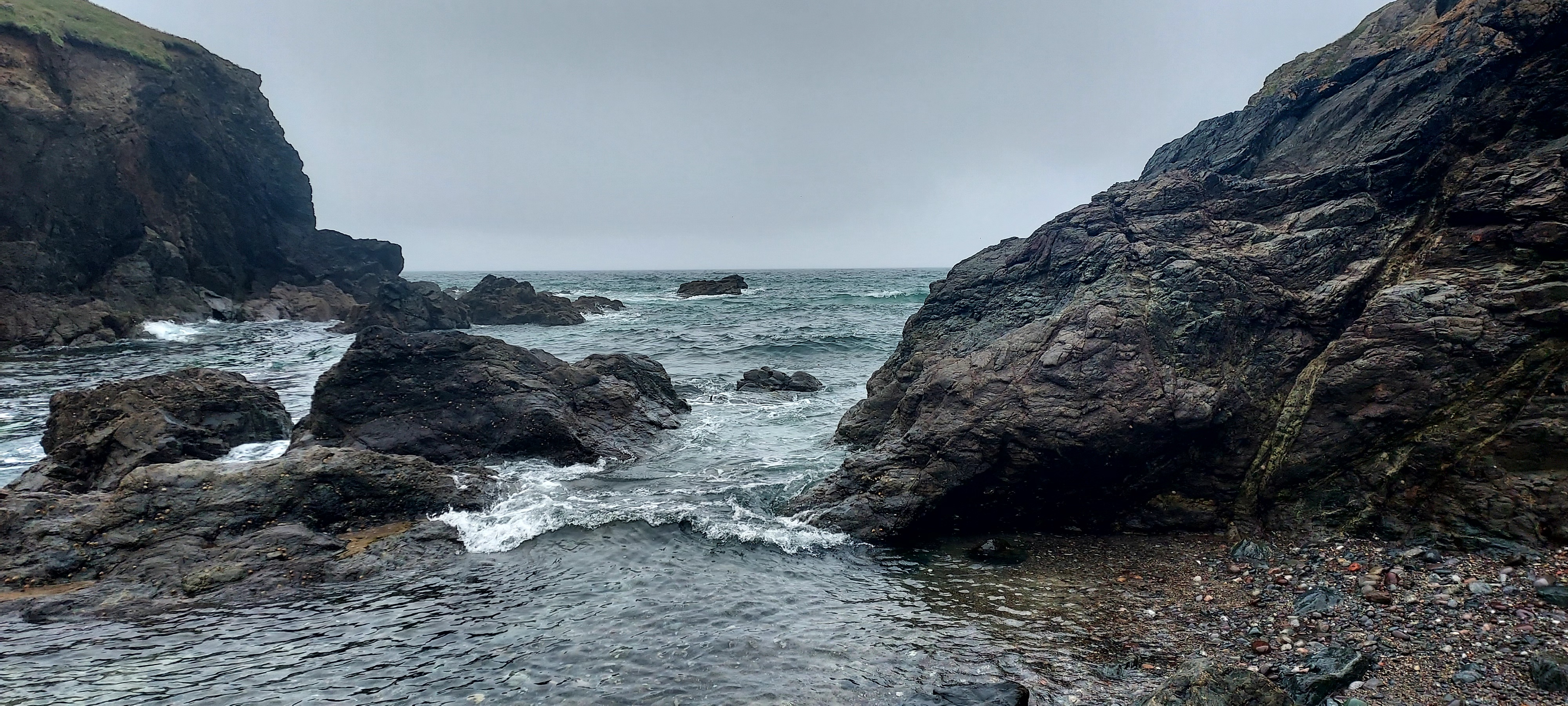

My family have understandably gone off exploring mini caves and rock climbing during this time, and have ended up taking a steep climb up over the rocks on one side of the cove to get back to the cliff path.
Precarious climbing, no-nonsense cliff plants and a glimpse of Choughs…
I reluctantly leave the wavelets to follow them, clambering in ungainly fashion, and stopping approximately every three feet to photograph the cove from a different vantage point, or a particularly bold cliffside plant, undeterred by the elements and exuberantly bold in their harsh surroundings.
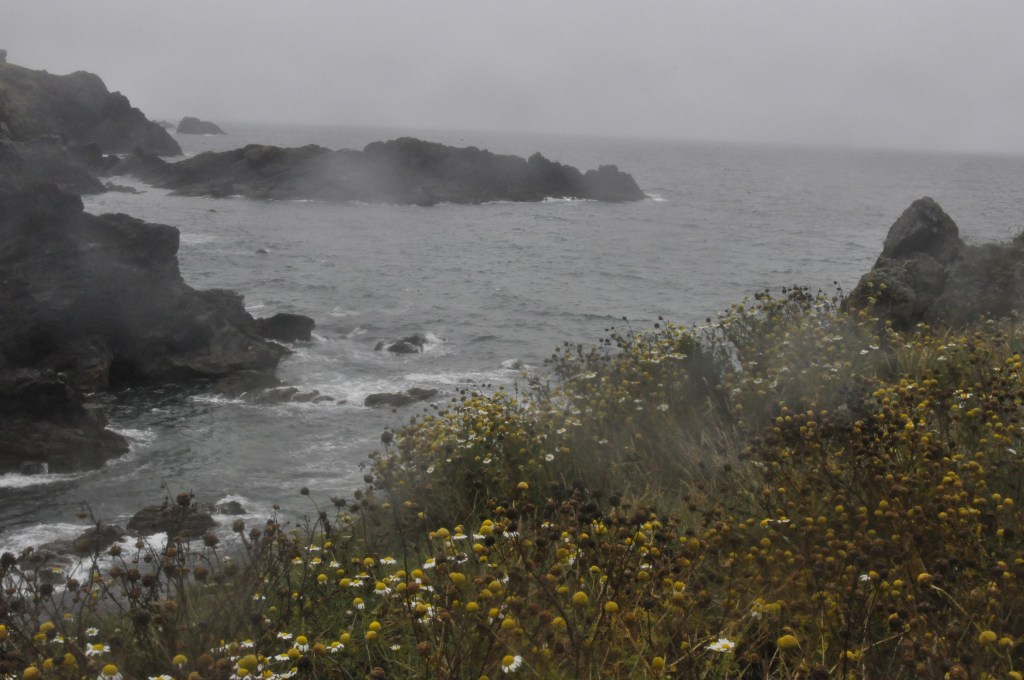
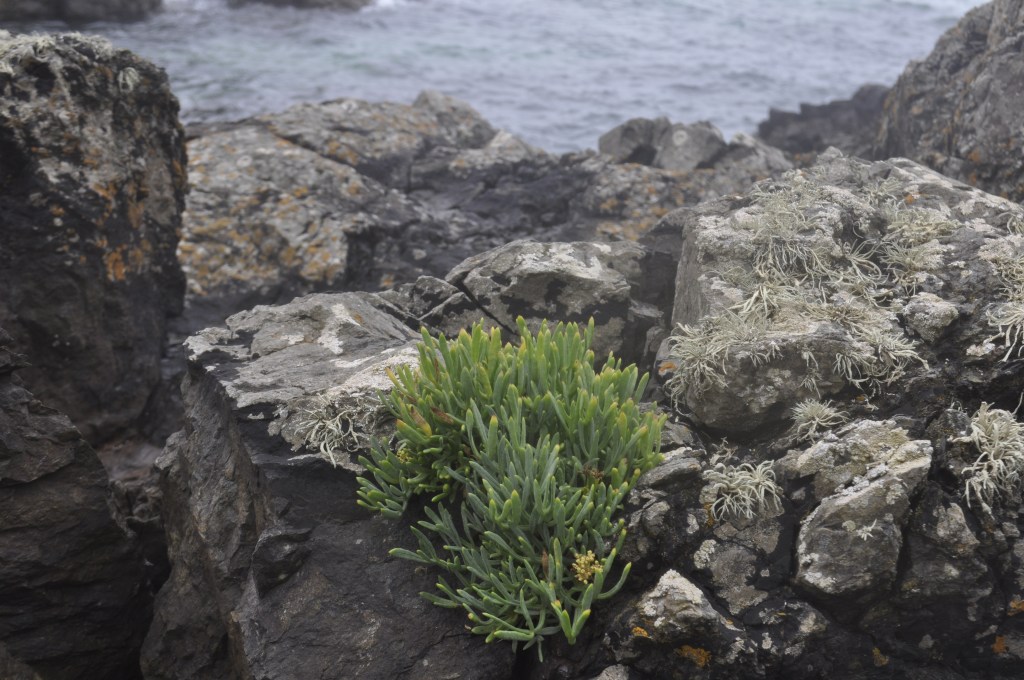
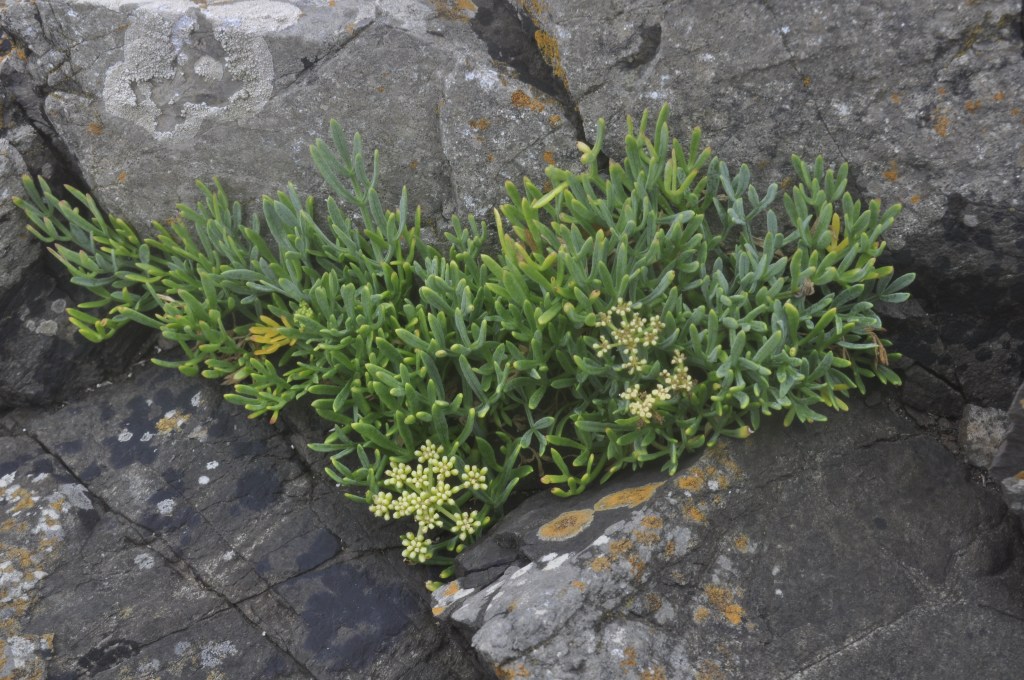
The steep climb yields a stunningly different view every few steps, which I’m desperate to photograph, but as I ascend I have to curb my distraction and taking start paying more attention to climbing as the wind becomes fiercer.
My family are atop a craggy outcrop at the pinacle of the cliff, holding firm to the rocks whilst determindly trying to feast on snacks that are being buffeted out of their hands by the wind. I have nearly reached them when the cry of “Chough!” goes up, and I think I can hear the strange gutteral call on the wind.
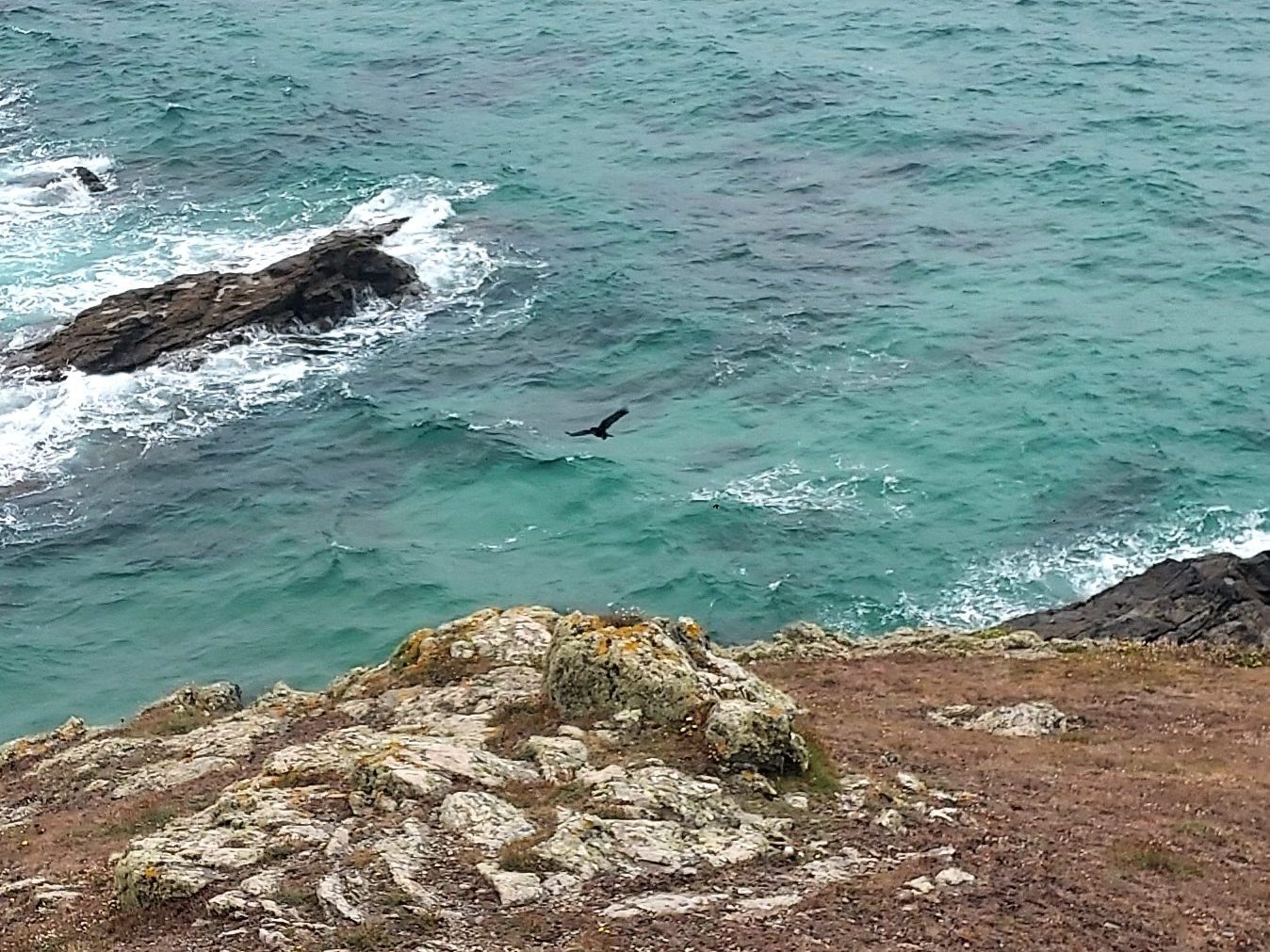
I scramble the last bit as quickly as I can, just in time to see the two black shapes on the clifftop beyond, which have been identified with the binoculars, and as we watch they ascend into the fierce wind and fly right past us.
Alas, I wasn’t fast enough to get a good shot, you will have to take my word for it that this elusive winged shape is a Chough, but seeing them again is more than enough, and we are all beaming.
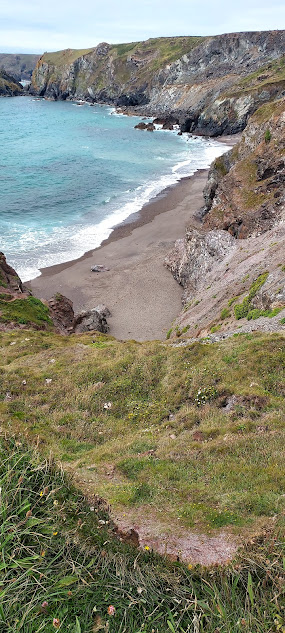
As we continue along the cliff path, we reach the edge of another of the lizard’s most remote and spectacular beaches. Lying between Caerthillian cove and Kynance, and accessible only via the coast path, is Pentreath beach, at low tide a wide expanse of idyllic sand exposed to the fiercest of the west coast weather.
Over the years its pathways down the sleep cliffs have been variously worn away or simply fallen into the sea, and now, although access is theoretically possible, it is precarious to put it mildly, or outright dangerous on a windy day.
It isn’t recommended for children or families apparently, the existing steep steps are just carved ruts in the side of the cliff, with no hand holds, and apparently where the lower part has fallen away, visitors need to use a rope to scramble up or down.
We all look down at it rather longingly. Another time, we promise.
The path turns inland now, and as it does so we stop and watch a kestrel hovering on the thermals in that magical way so unique to them, head curved down at the ready, intent on some unsuspecting heathland vole.
A magical walk through heathland wildflowers…
Away from the immediate cliff edge, the wind drops, and the wildness of the craggy rock is replaced by soft and endless stretches of wildflower heath, flocked with bright butterflies and insects.
Despite the spectacularly barren bedrock of serpetinite, the Lizard is home to over 600 species of flowering plants, nearly a quarter of all UK species. The unique climate as well a geology produces a very specialist but rich array of wildflowers.
Beside the vivid gorse flowers can be found a variety of heathers and orchids, alongside Goonhilly heath, meadowsweet, black bog rush, devil’s plaything, clovers, spring sandwort, bog asphodel and many many more such gloriously named plants.
We spy kidney vetch, sea campion and bird’s foot trefoil among the swaying blooms, and amidst the Sea Mayweed we notice we are also surrounded by the intense and heady scent of camomile, its perky daisy like blooms joining the abundant clifftop displays.
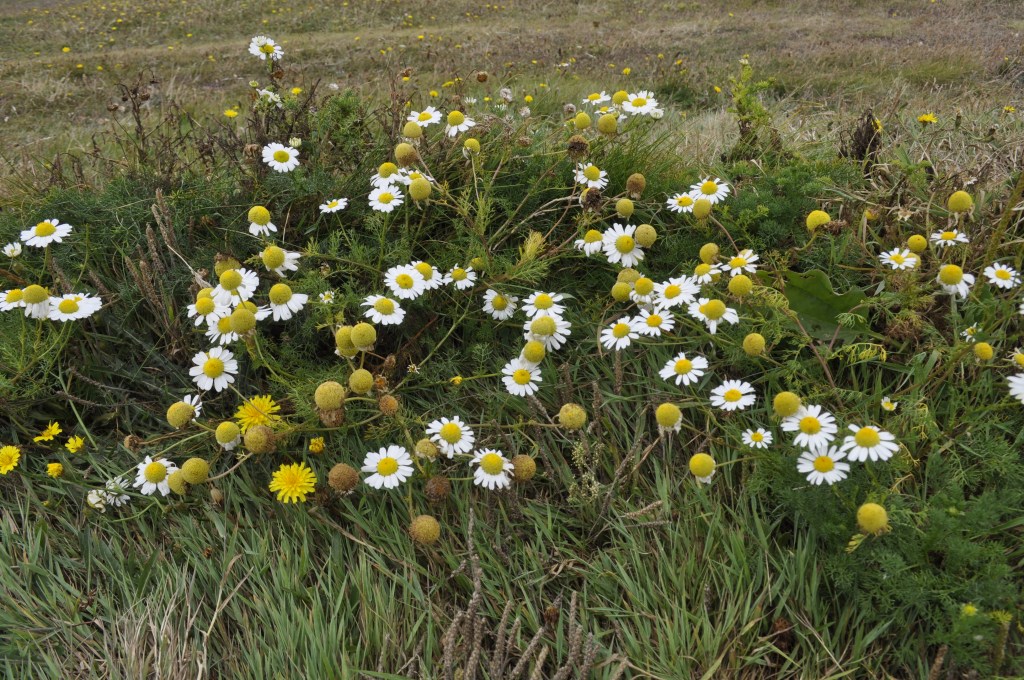
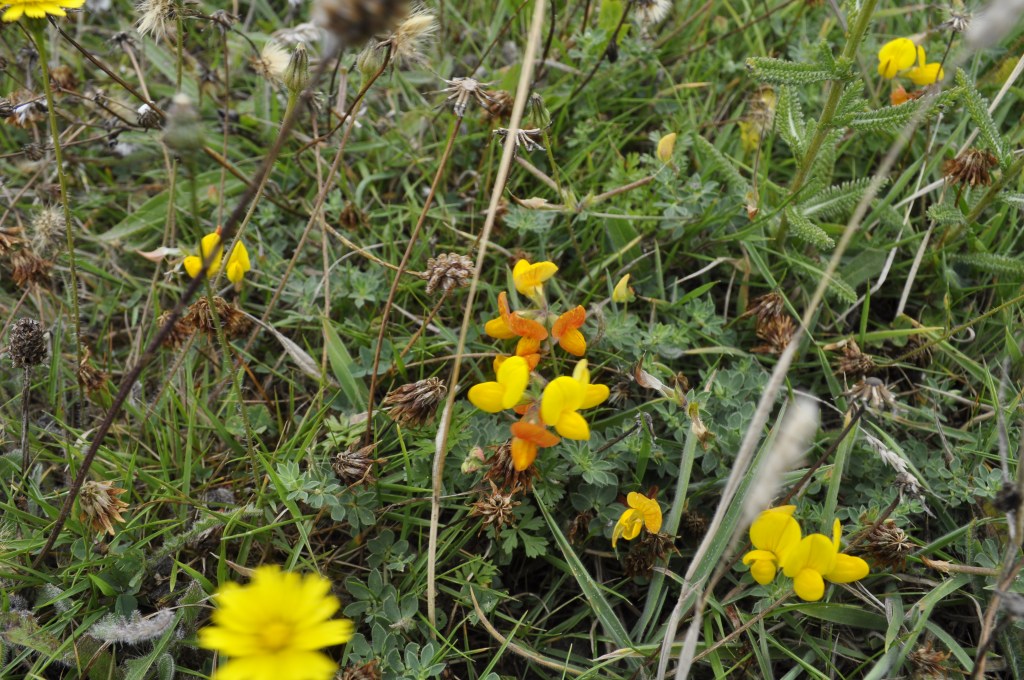
The flowers of the heathland seem to stretch out endlessly before us, and the greyness of the day somehow only enhances the sense of magic here, of an ancient mystical landscape, swathed in harsh, resilient beauty.


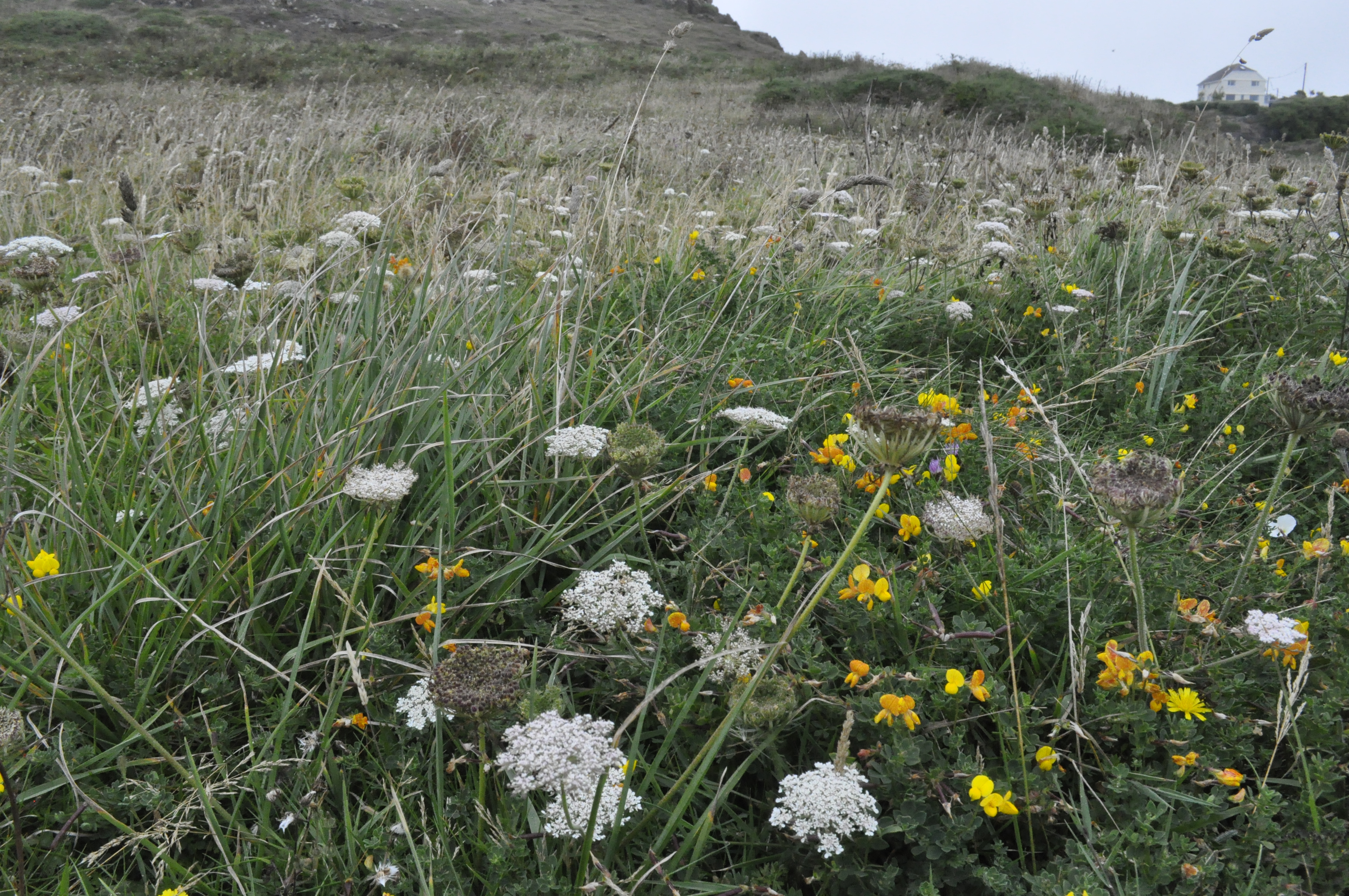
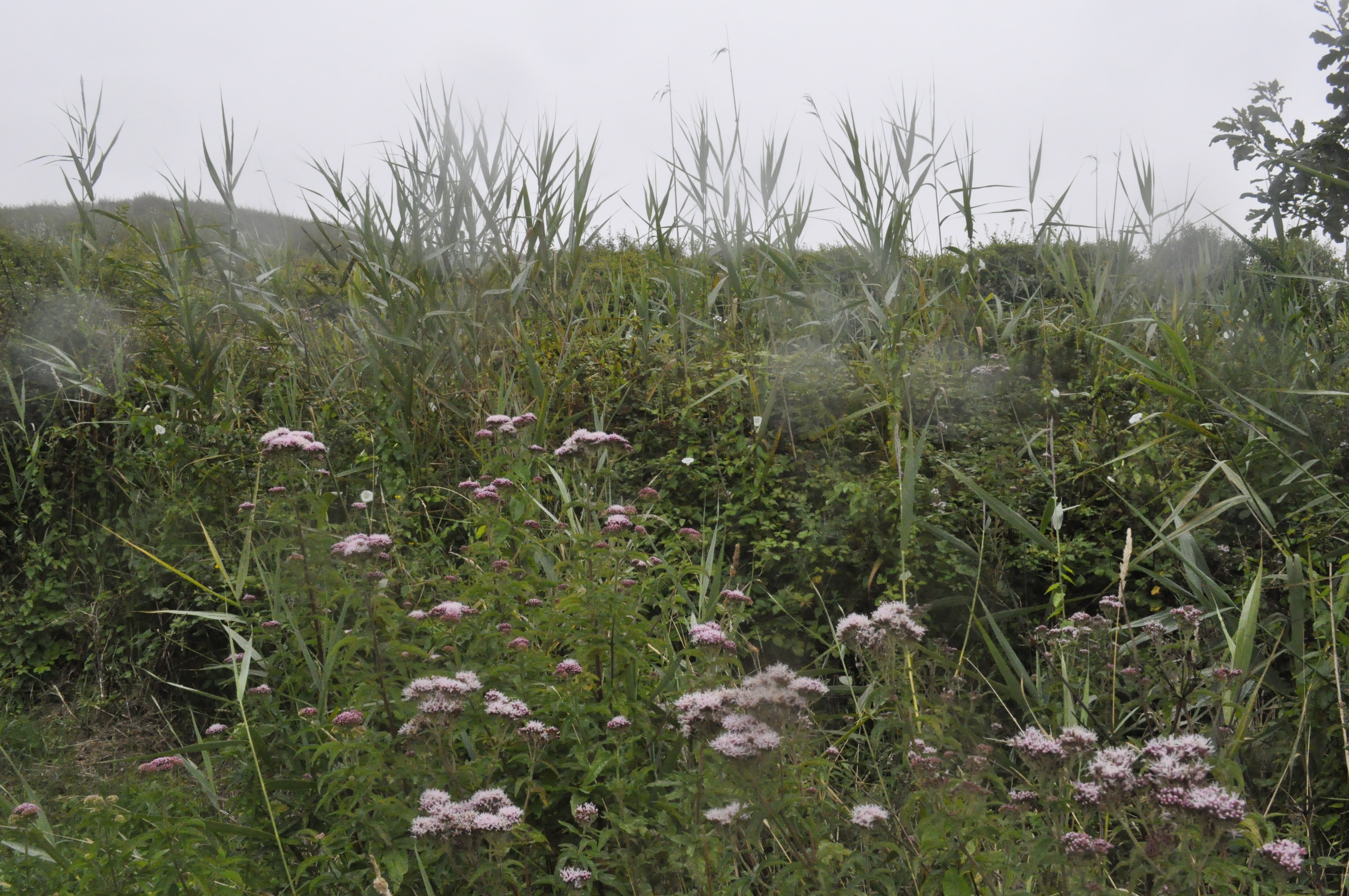
Our return route leads us through dips in the valley, secretive dells where goldfinches swoop in and out of the vegetation in twittering clusters. The dewlike droplets of the misty rain render their own unique take on the landscape.
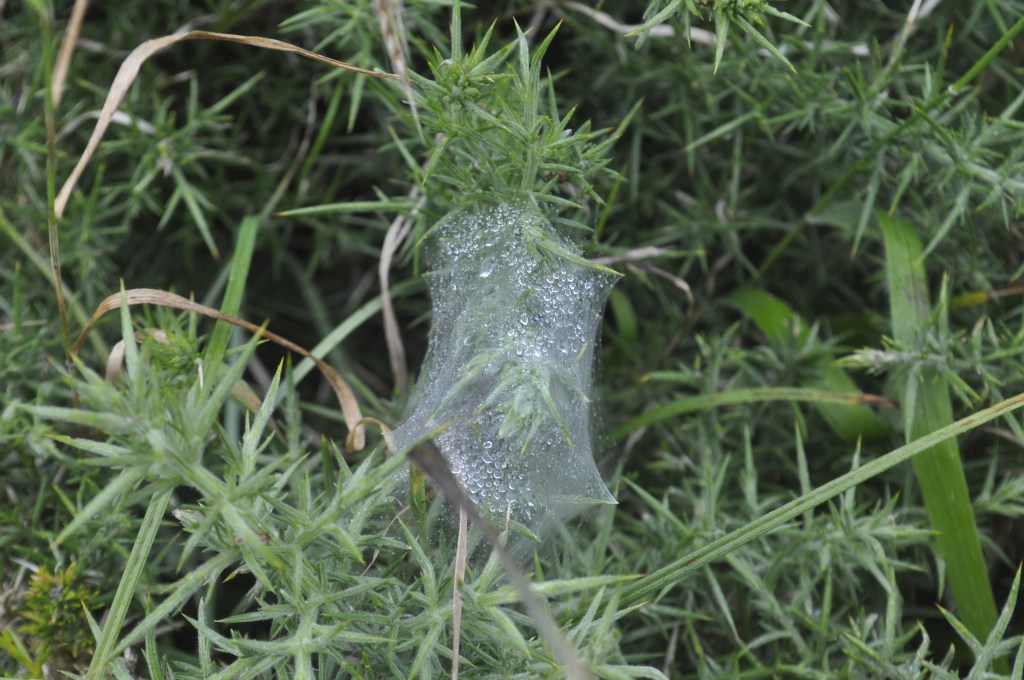
A stretch of our return path includes a part where a tunnel has seemingly been carved through the gorse. The shelter and quiet within are complete, and little openings off to the sides reveal miniature fairy houses, resplendent in their green kingdom.
The final stretch back to the lizard village is a raised field path, with incredible views over the gorse covered downs. As we walk we hear the distinct calls of a bird of prey, and two come wheeling into view into the adjacent field.
Sparrowhawks. They swoop and swerve within feet of each other, their cries loud and spectral – we think they are fighting, but then we witness a mid – air high speed carrion pass, one to another, the skill and grace of which is astonishing.
To finish such a walk with Sparrowhawks, after seeing Choughs, feels like a spectacular way to end a holiday. It is a walk that is high on the magic and exhilaration scale, but is also high on the damp clothes and tired climbing legs scale, and as we reach the village, the presence of tea and pasties within striking distance is a just reward.
I am reasonably convinced by now that there is something in the land, sea and air here that fortifies the soul beyond a normal trip to the seaside. As we make plans to return home I resolve to try and carry it within me throughout the year.
 bewilderbrain
Thoughts or ramblings welcome here…