

The big mountain, the looming pines, the hidden mining past and the life in bloom…
Friday 26th September 2025
Walk start time: 9.00am
Walk finish time: 10.35am
Walk area: Mynydd Gelliwion
Miles walked: 4.5
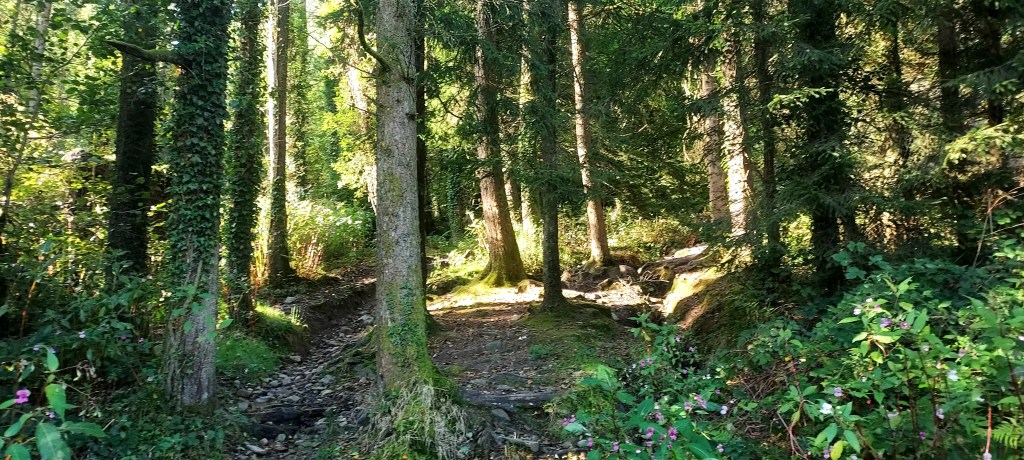
Today’s walk heads into the land of deep evergreens grown upon the spoil of our mining past. A mountain whose landscape has changed and evolved through the mists of time.
I am pondering its metamorphosis as I head towards it, beside the field edge at Dan-y-Lan, looking ahead of me to a steep dense wall of trees.
Once upon a time, sheep grazed in open fields on the top of Mynydd Gelliwion (Gelliwion mountain) before great piles of spoil from the then thriving mines below were deposited and piled across swathes of the mountains breast, earning it the nickname “The Pimple.”
Coal spoil would have been transported onto the mountainside via tramways from the linked Lewis Merthyr and Ty Mawr collieries, and two extensive areas of coal spoil lie beneath what is now a densely forested landscape.
The mountain during the period where mining was thriving joined hundreds of others similar in forming part of a grey and scarred industrial landscape.
Though a local who lived high up on Gelliwion road in his youth, once told me how the coal dust on a lower spoil site, next to the old Maritime colliery, used to sparkle magically on starry or moonlit nights…
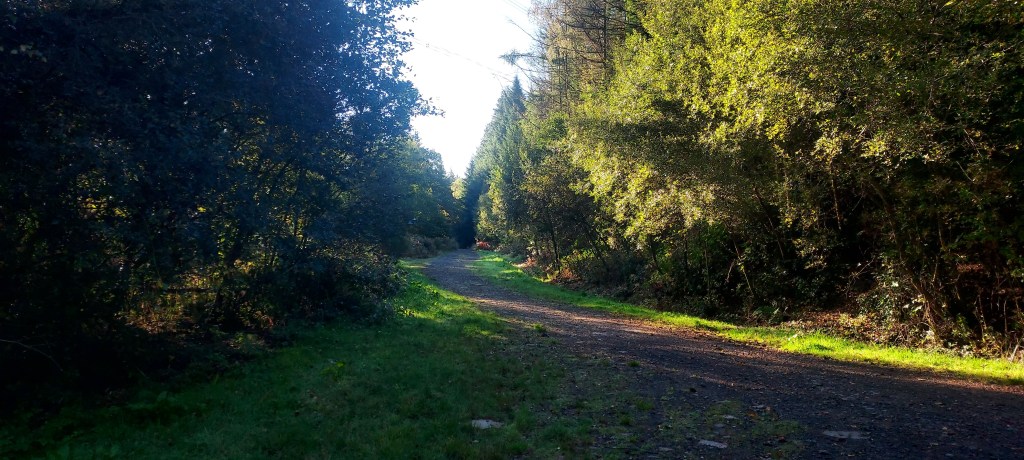
It is a beautiful autumn morning, the sun is still low in the blue sky as I trudge along the gravelly path leading onto the main mountain pathway.
It looks innocent enough, but this first stretch of a long dog-leg path which winds it’s way up the mountain is surprisingly long, and whilst not fierce, has a relentlessly steady ascent.
I have family from the South Wales valleys, specifically from the Cefn Coed area, not so very far from where I have ended up settling, despite being a non-native.
I remember visits there as a child, which was – well – a fair few decades ago now. I have images of stretches of landscape that looked grey, on rainy or dull days they looked bleak and forbidding, inhospitable places.
I also have a clear image of the sun shining one day, glittering out over a wet landscape near the viaduct at Cefn Coed, and even amidst the dark and industrial landscape seeing a harsh beauty in the uniquely steep hills and valleys.
The past twenty, thirty, forty years have witnessed a gradual and inspiring evolution in this incredible landscape.
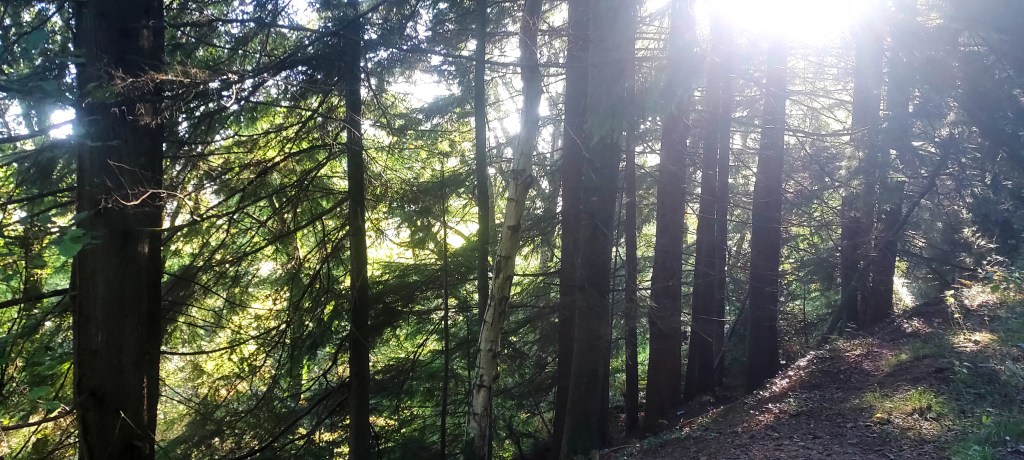
My path now is flanked on either side by looming conifers, part screening the still rising rays of the sun, and sheltering smaller species of shrubs and greenery along their edges.
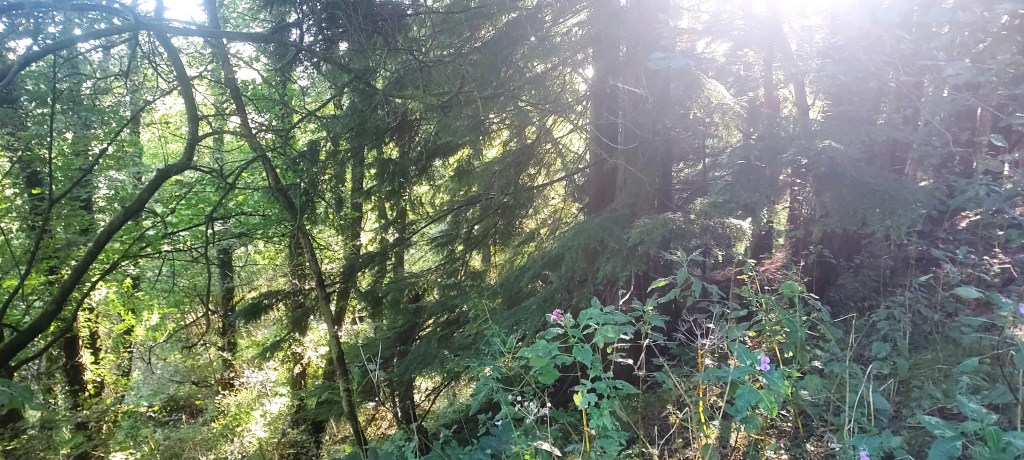
The light of the sun through the trees has me as captivated as it always does, and I notice the feel of the air, fresher again today, and mingled with the scent of forest mulch and pine resin. ( see also my last walk – The magical light of equinox )
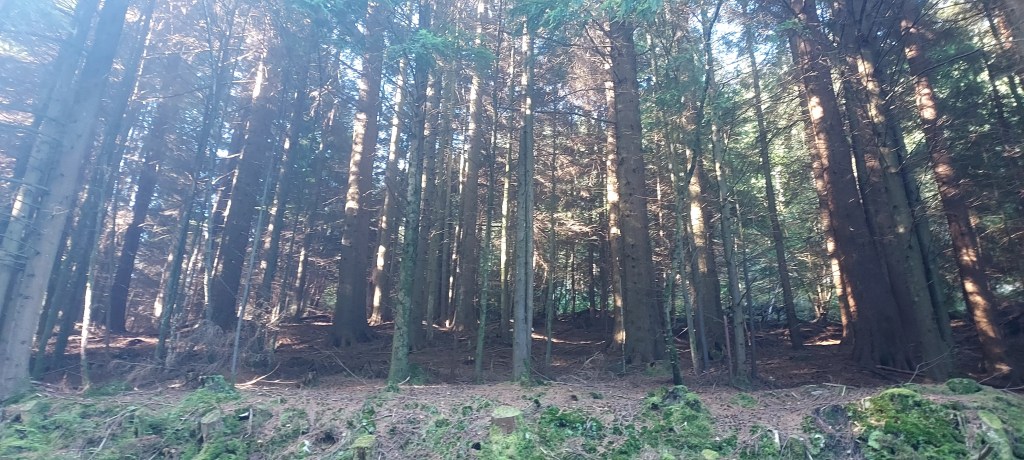
In the decades following the demise of deep coal mining in Wales, nature has exerted her power, with a slow but commanding transformation of a once desolate environment.
Left in nature’s hands, places that once illuminated the ecological destruction caused by industry, have become populated with a wide variety of new habitats and species.
Intricate and interwoven landscapes have formed and bloomed into heathland, wild-flower rich grasslands, diverse moss and lichen, wetlands, scrubland and woodland, each supporting its own unique wildlife.
As I continue up the forest path, I look into the woodland on either side, noting clearings, patches of sunlight, where opportunities for species other than the evergreens have chances to be kindled into life.
The dark edges of some sections look deep and forboding, forest depths that hold no light at all, where the landscape is entirely other, and where it feels like some deeper magic of the woods, and possibly faeries, hold reign.
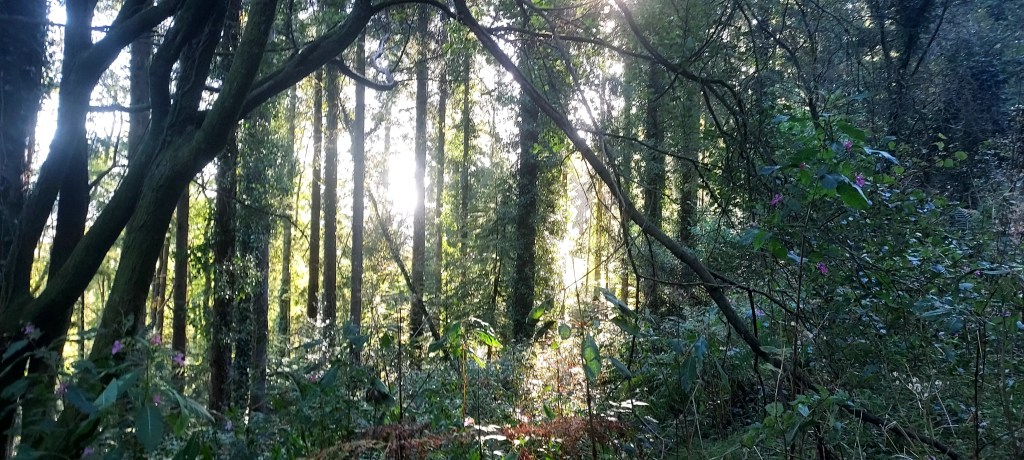
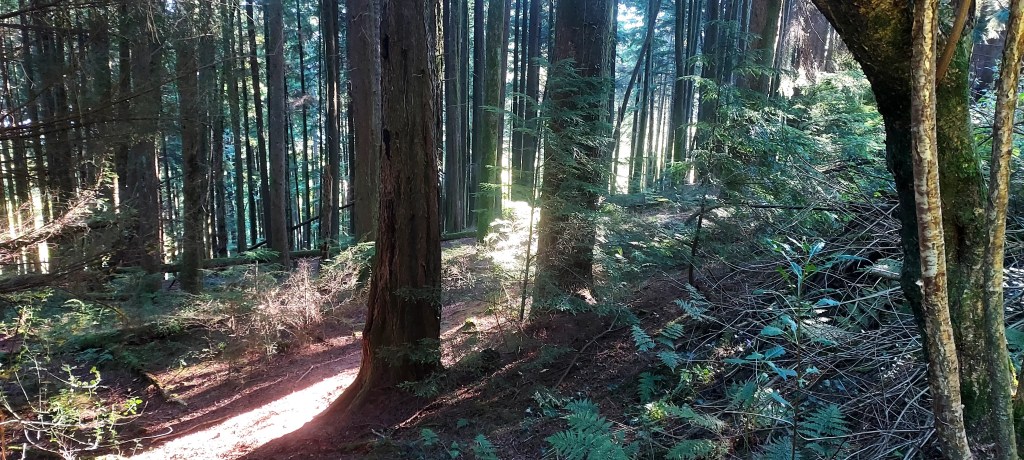
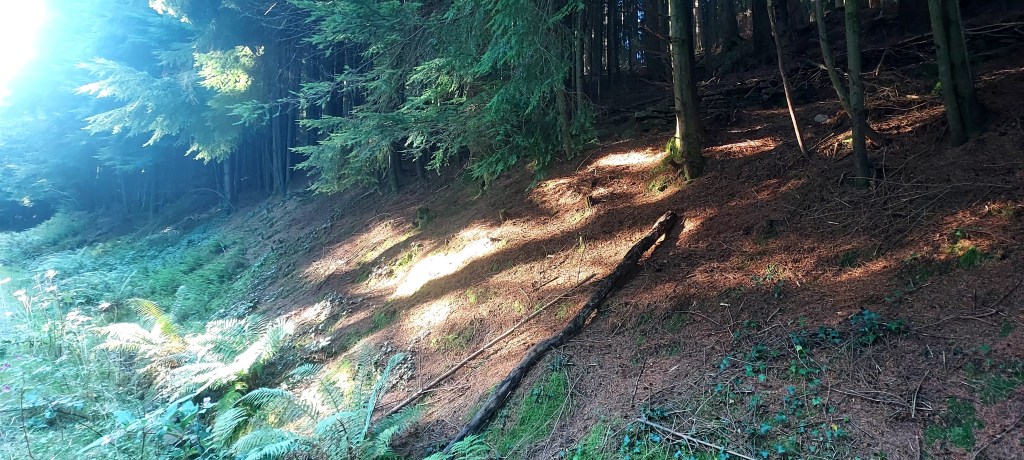
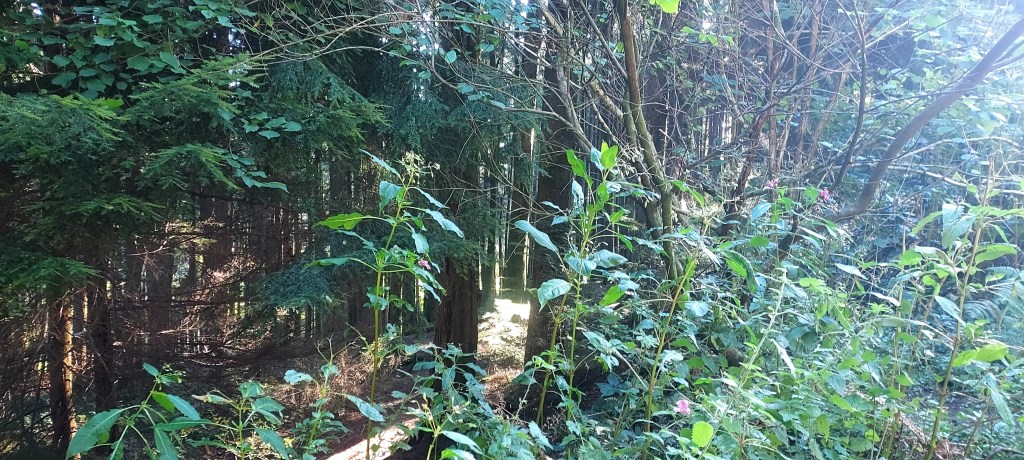
Many old spoil sites have been allowed to evolve and flourish in natural course, others, such as in the case of Mynydd Gelliwion, have been planted with hardy evergreen forests, to hold the potentially precarious landscape in place and absorb excess water in the tree roots.
Unmanaged spoil has a dangerous and tragic history, which is deeply imbued in the cultural consciousness of the valleys, and whose lasting memory is vital. Today, ensuring the safety and management, as well as public awareness of these sites is rightly being given much higher priority.
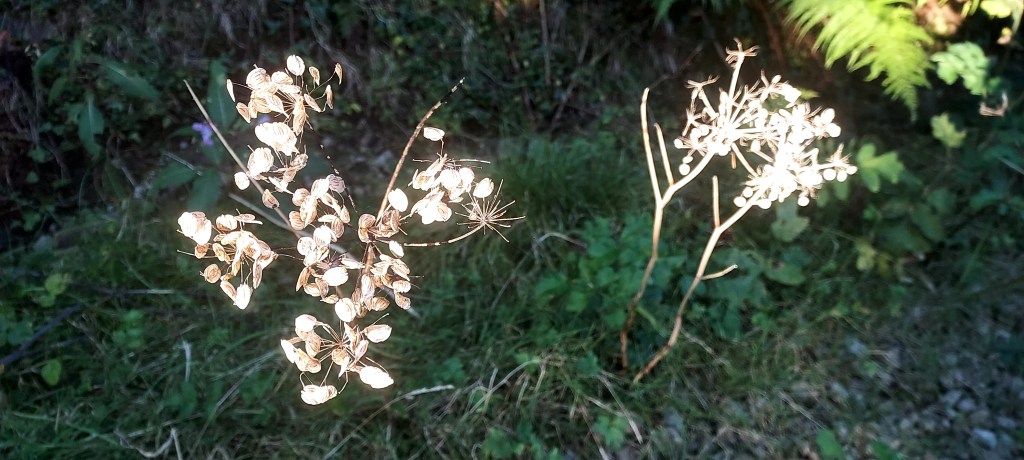
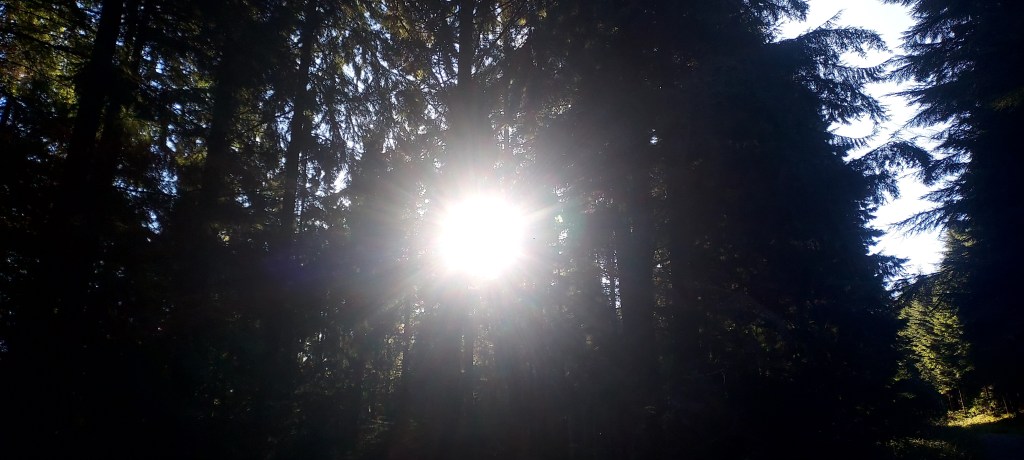
Some see the swathes of evergreen forest that cover parts of the ex-mining valleys as an ecologically barren landscape.
Whilst it is true that coniferous forests cannot support the same diversity of life as our more ancient deciduous woodlands, they are anything but redundant.
For one thing, with their evergreen foliage, coniferous forests are a year round removal system for carbon dioxide from the atmosphere, and therefore have a crucial role in helping to mitigate climate change.
Coniferous forests also offer food and vital shelter to many species, including squirrels, woodpeckers, owls and other birds of prey, as well as a huge variety of invertebrates.
Bark, seeds, twigs and needles can provide valuable year-round food sources, and the dense evergreen canopy offers protection from predators, as well as shelter from the cold and winds for many species of roosting bird.
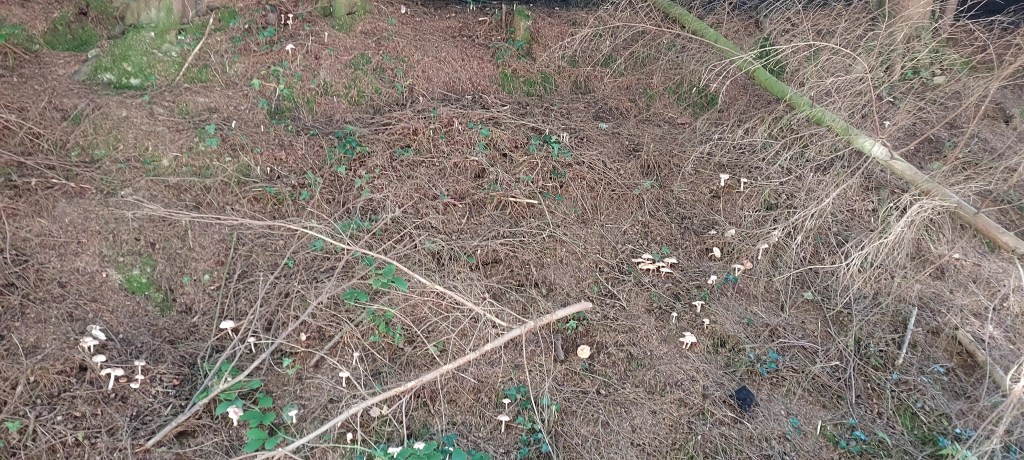
The forest floor and woodland edges are also a prime location for varied species of fungi, like these unassuming miniature pop-ups on the first stretch of the mountain path.
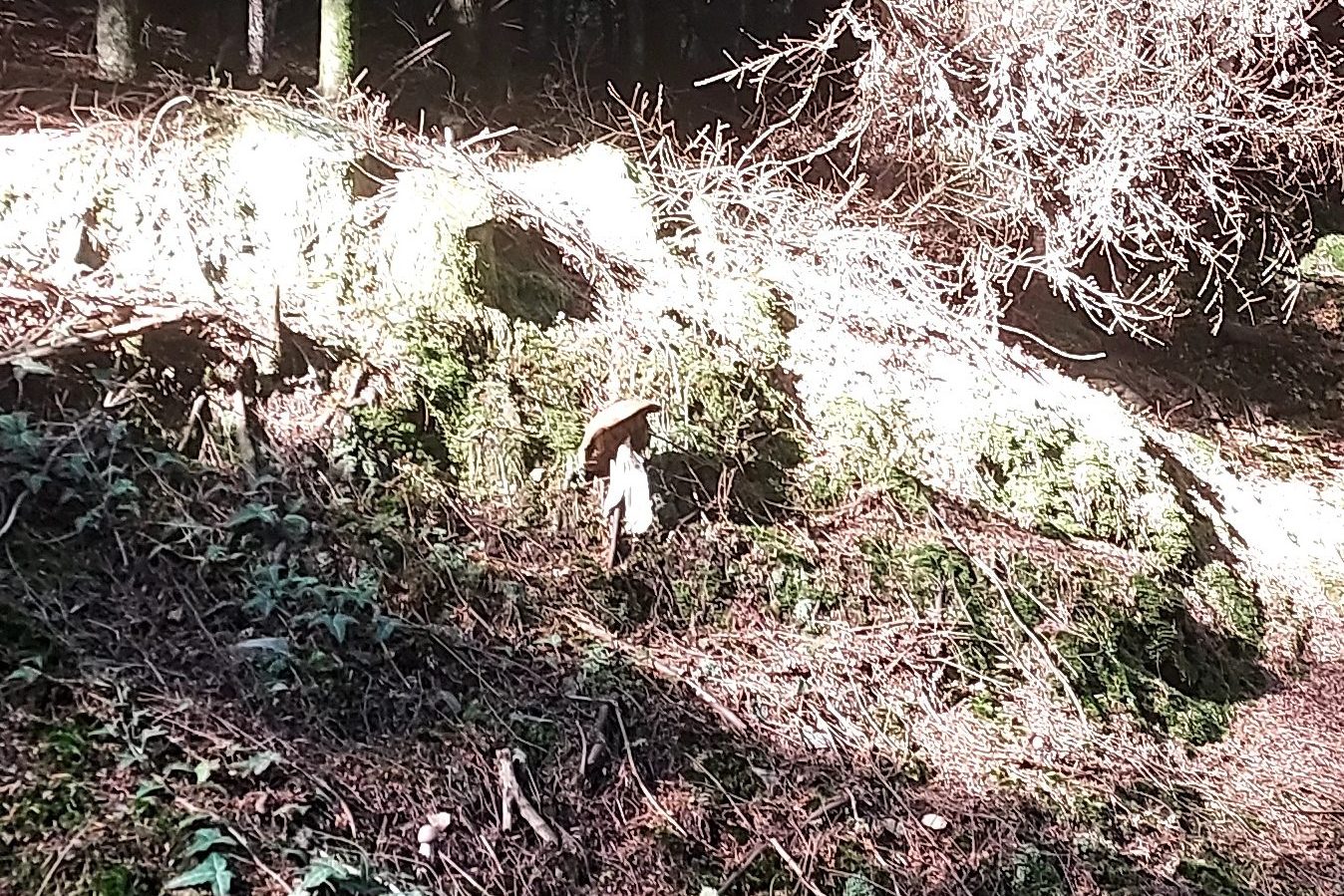
I reach the first u-turn in the dog-leg path, which takes me high enough to be in the suns reach, and the gentle late September heat warms my back as I start up the second long section of path. I haven’t seen another soul, it’s just me and the enormous firs stretching out above and beyond me.
After walking for about ten minutes, I reach an intersection, the path ahead continues the main long haul up the mountain, a wide, gravelly and relentless straight route for a long way.
It is open and sunny, but I want to be more in the woods, so I instead take a fork off which doubles back in the direction I have come from, but heading further up the mountain through the edge of the woods.
The path becomes much narrower, strewn with autumn leaves, and I am tracking away from the evergreens into a stretch of more varied and older woodland.
A moss covered dry stone wall suggests the possibility of this area carrying remnants of the mountain’s older farming history, but on other parts of the mountain are signs and remnants of the mine industry, such as the pathways taken by the old tram system.
I feel instantly uplifted by this part of the path, a diverse range of young trees and shrubs sprout from its edges, and I feel I am walking the edge of the ancient original mountain woods and the dense coniferous plantation.
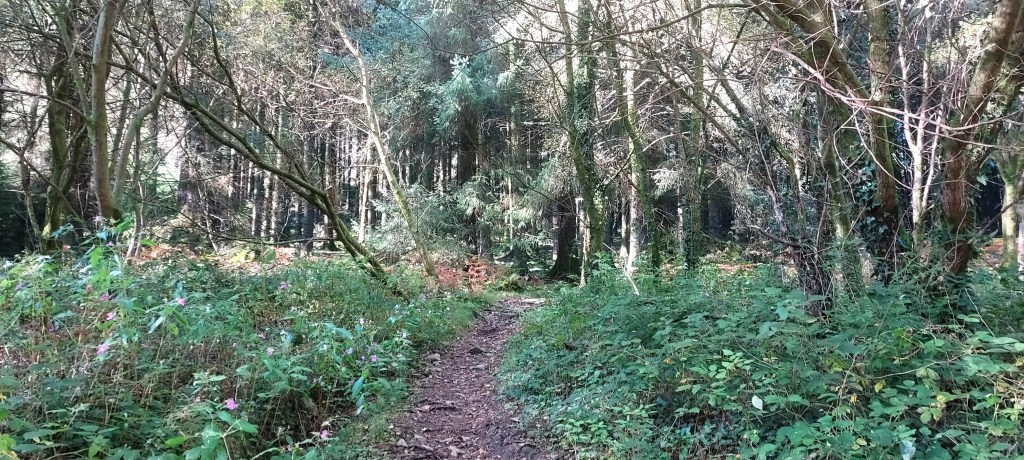
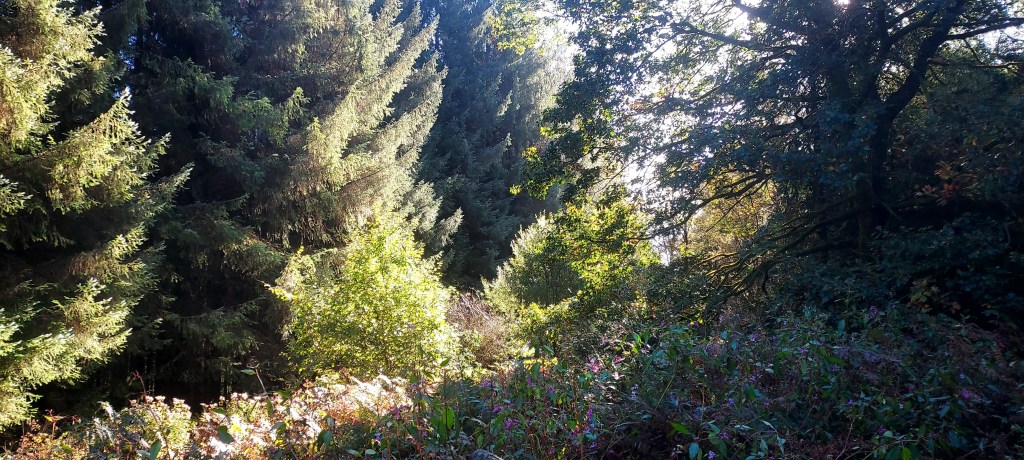
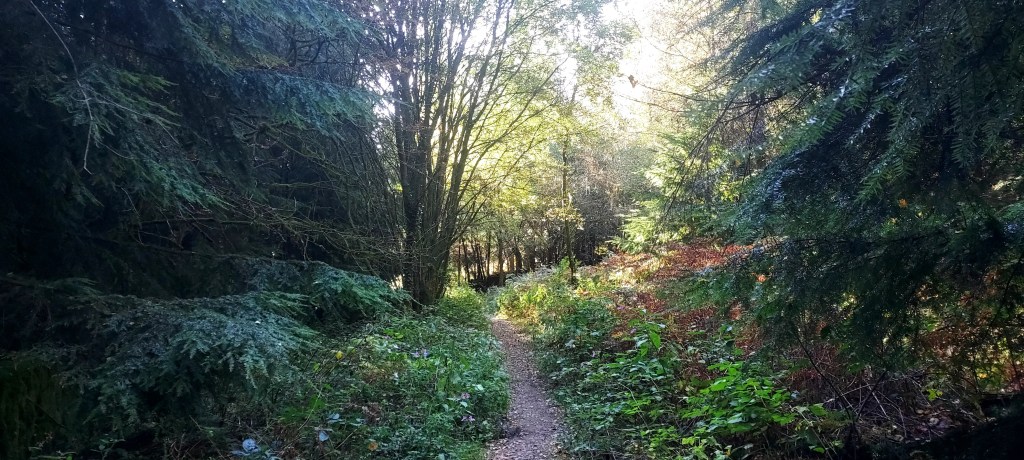
Evergreens and deciduous species exist side by side in this section, the latter rising stalwartly in edges and pockets where the shade of the looming firs doesn’t reach, and the number of saplings of both types feels reassuring.
Tree life is blooming and thriving even in difficult patches, and sunlight reaches in to touch and bathe the forest floor in light, turning pine needles luminescent.
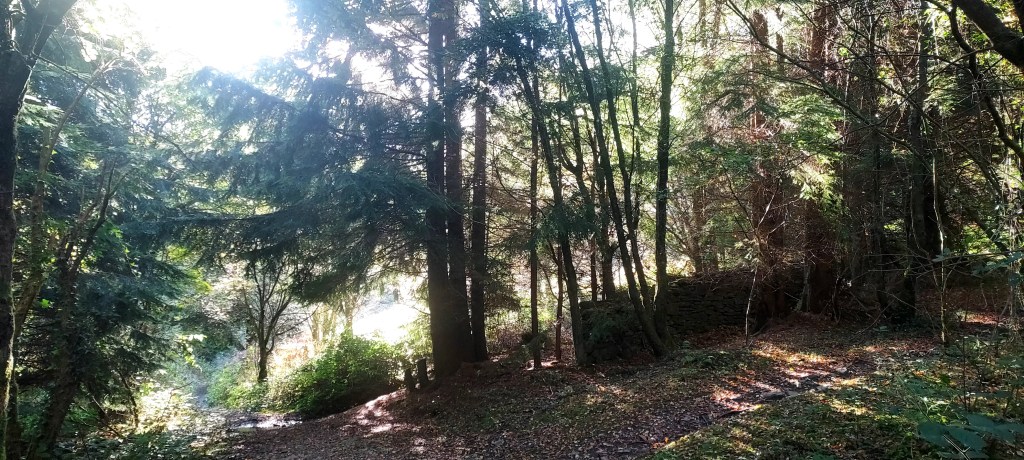
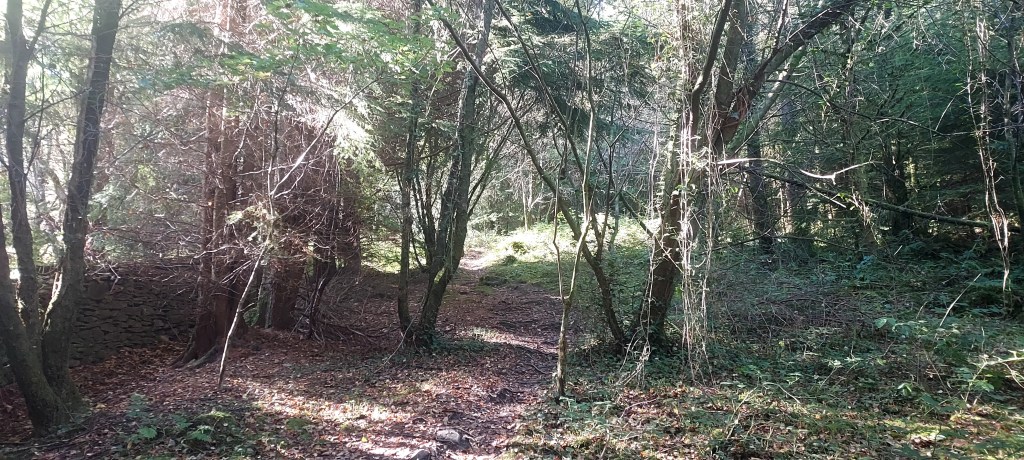
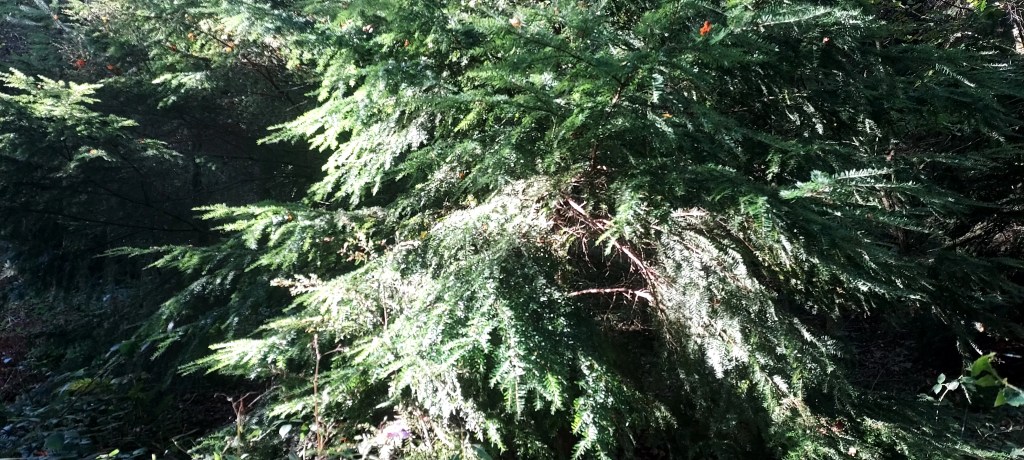
The autumn colours on the edges of the trees here are still only at the very edge of fledging, the bright blue sky and green leaves offering a bridge back to summer, while lower light, colder air, and dustings of dry leaves underfoot hint gently of autumn’s rise.
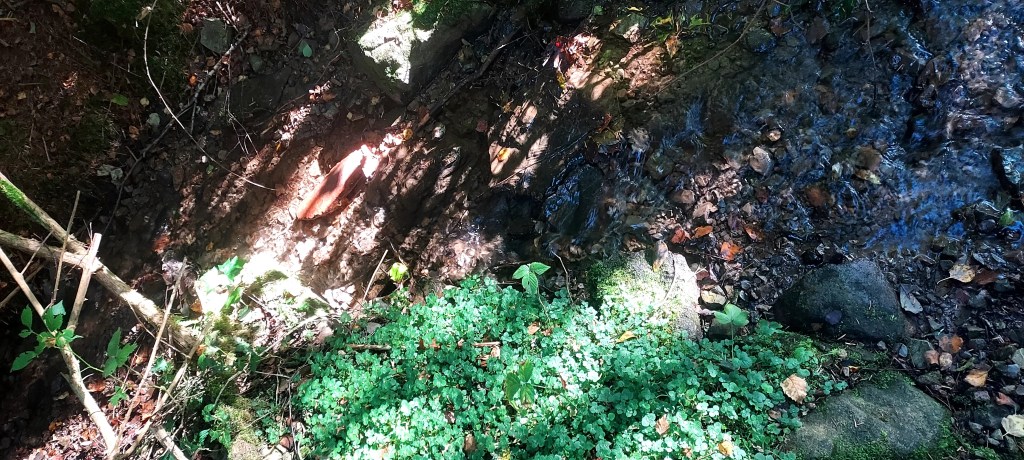
I step over a clear trickling steam, one of many abundant water sources on the mountain, now clean and pure, life supporting, as compared to years past.
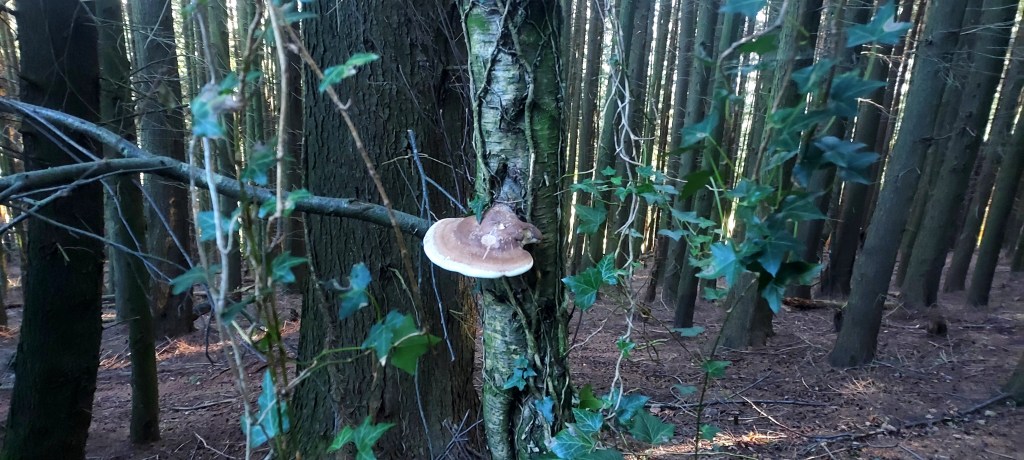
More elaborate fungi can now be spotted here and there, appearing shell-like from the bark of trees.
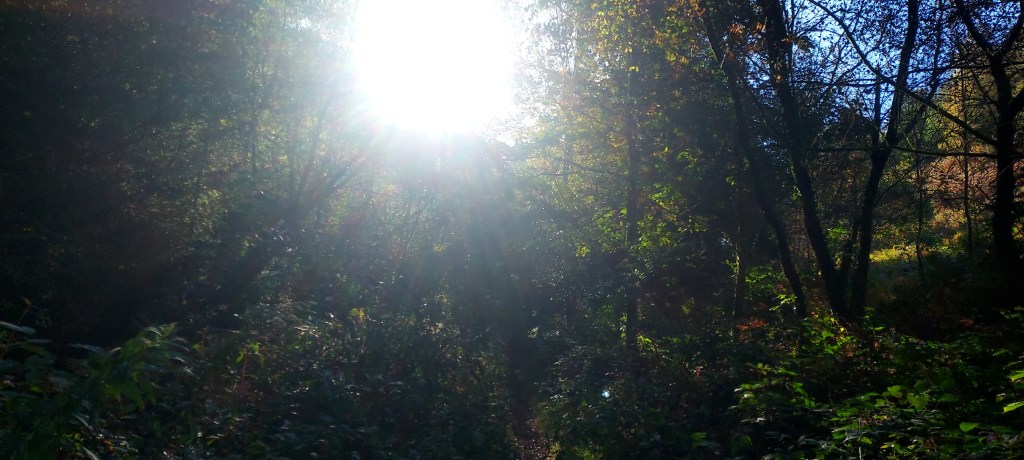
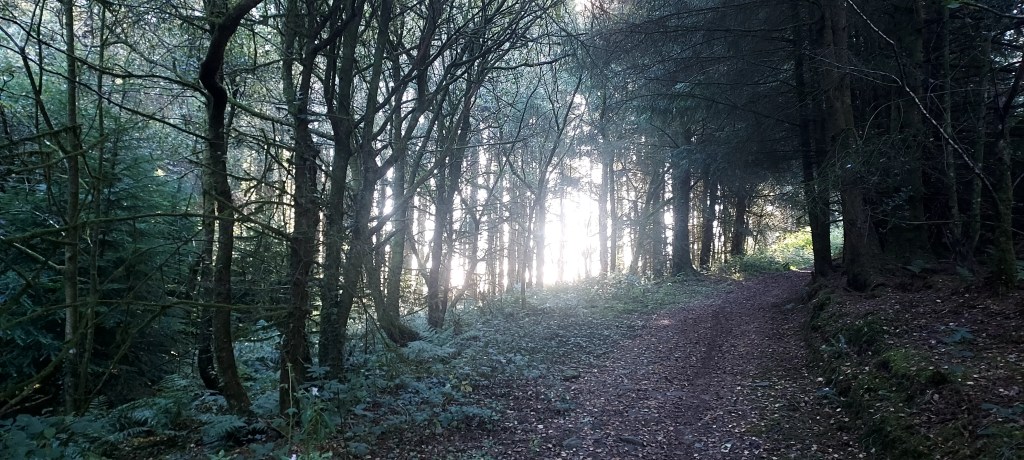
As I turn a corner, the path continues to gently ascend, and there is a sense of anticipation in the misty path and trees ahead.
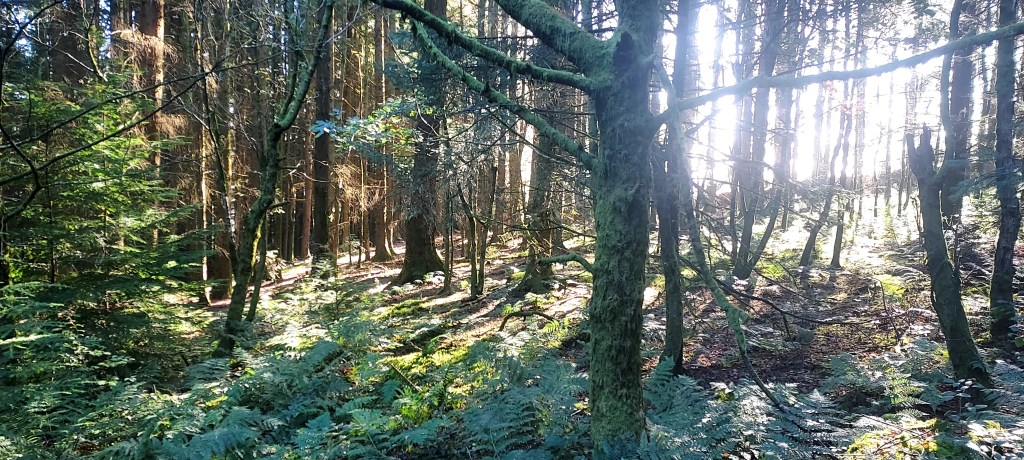
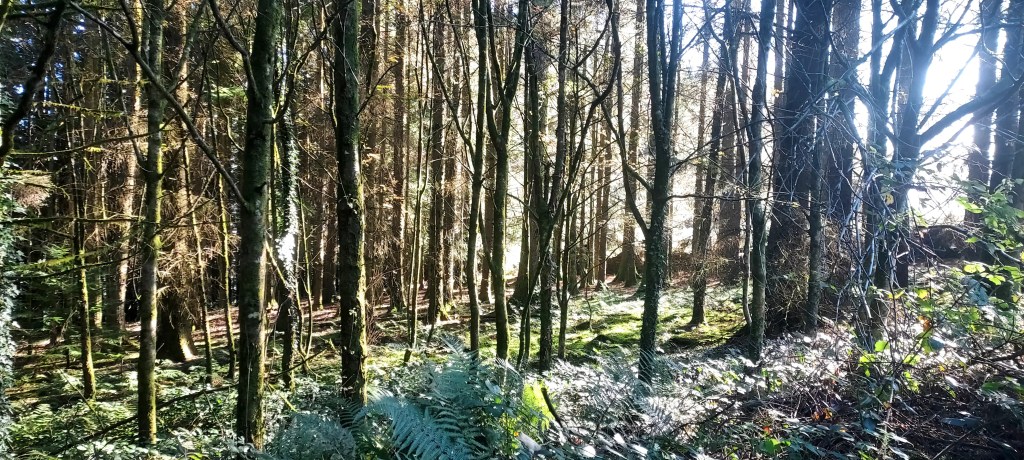
Lime green mossy boulders are strewn across the forest floor here, drenched in morning sunlight, dappling through the trunks. Soft ferns gather at its edges like guardians of a magical land, and ahead of me another stone wall reveals a hint of open sky and hillside beyond.
The beauty of this little piece of woodland is simply breathtaking. It feels still, peaceful, yet still vibrating with the deep life and oxygen of the forest.
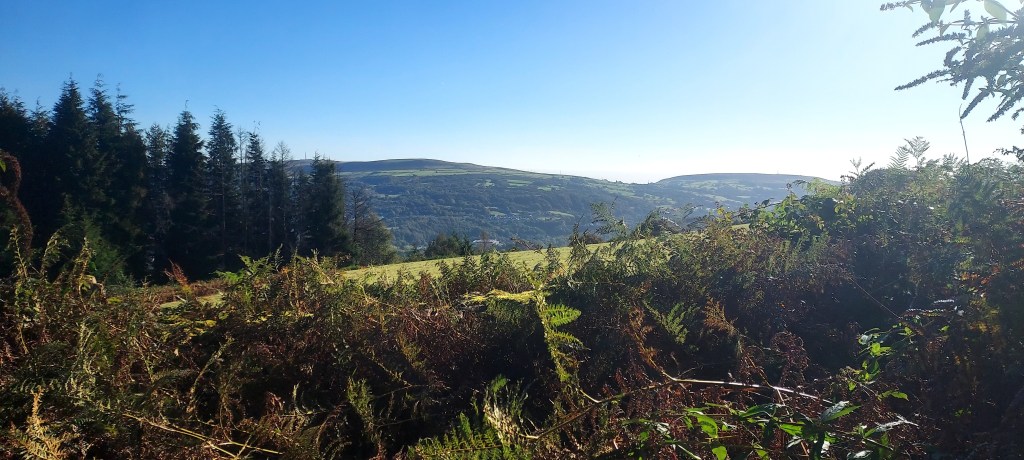
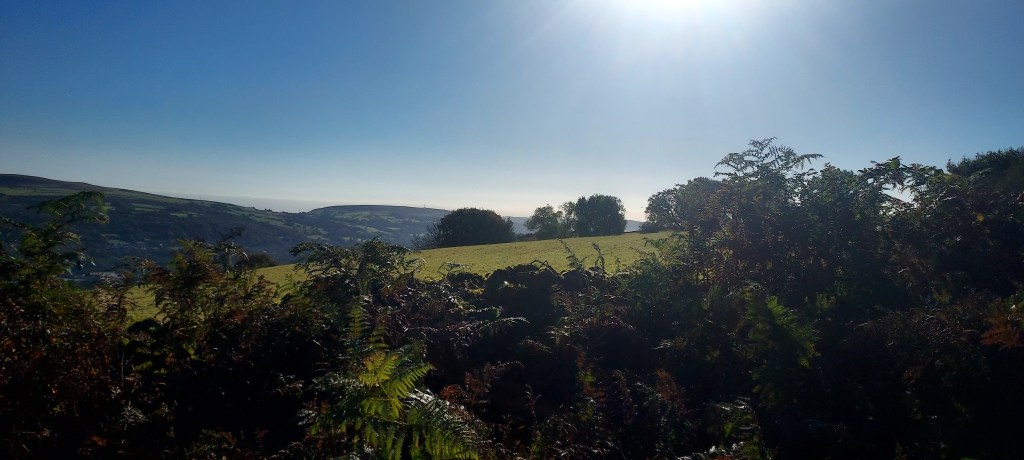
In a few metres more, the sky opens out in front of me, revealing green fields falling away beneath the bracken garnished walls. The hills of Eglwysilan under a clear blue sky, and stunning views out into the valley. Gentle birdsong accompanies my view.
Having walked quite a distance to get to this point, I decide reluctantly that it is time to retrace my steps, and begin to turn inwards back into the forest.
But the path I have walked today has filled me with hope and optimism, reminders of nature’s power and resilience, and the incredible beauty still re-kindling and blooming from the dusts of past industry.
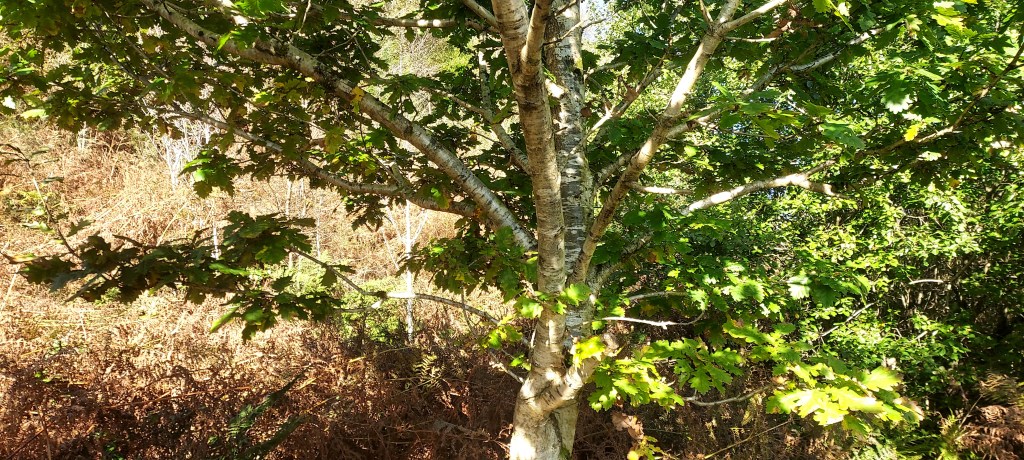
The feeling I have, as I trace my way down the long mountain path, is encapsulated perfectly by this sun dappled young oak, standing bold and thriving on the mountainside, amidst the autumn bracken.
 bewilderbrain
Thoughts or ramblings welcome here…